Showing posts with label Ray Daniel. Show all posts

Friday, June 23, 2017

Guest Post: Ray Daniel - Hacked

I'm not going to lie, this is one of the most useful guest posts we've ever had. Stolen passwords haunt our lives on the daily. Thankfully, Ray Daniel gives us some tips on how to protect ourselves from those pesky hackers, in correlation with his latest release, Hacked. The fourth book in the Tucker Mysteries, which is available now!


Hackers love passwords. They love to use them, sell them, and trade them with their friends. Once they have passwords they can steal identities, publish secrets, and create a wide variety of mischief and mayhem.  So, how do they get them?  Most importantly, how could they get yours.

It's perhaps comforting to know that they don't get your password because they know your birthday, your dog's name, or the names of your loved ones.  While not using any of that personal information to create a password is good advice, we don't live in a creepy world where hackers are omniscient.

Hackers have two primary ways of getting your password: they can guess it, or they can trick you into giving it to them.  Let's look at both of those approaches and then see what we can do to protect ourselves.
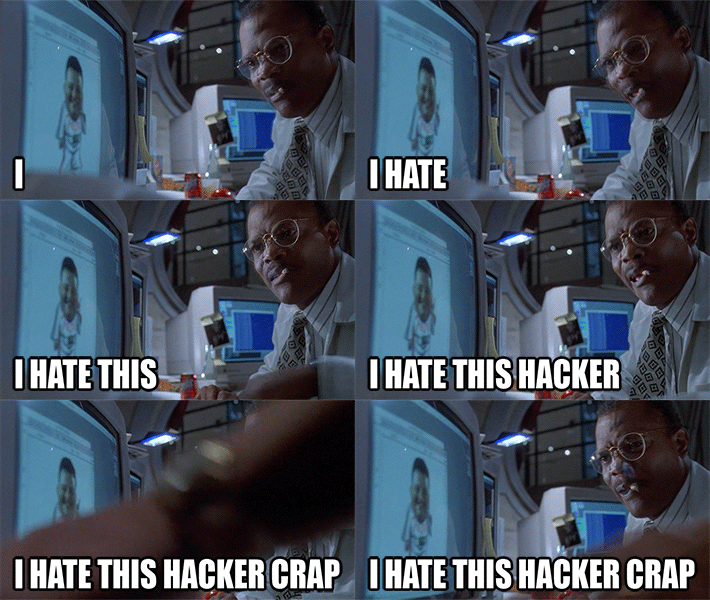

When it comes to guessing passwords, one imagines the hacker going to Amazon.com and trying passwords until one hits.  This, of course, does not work.  Amazon.com and other sites place limits on the number of guesses.

Instead hackers need to steal databases full of email addresses and their associated encrypted password.  Encryption takes your password and turns it into an unintelligible string of letters.  For example, the password 'password' becomes the following:

5E884898DA28047151D0E56F8DC6292773603D0D6AABBDD62A11EF721D1542D8

There's no way to figure out the word 'password' from that.  The very similar password 'Password' looks like this:

E7CF3EF4F17C3999A94F2C6F612E8A888E5B1026878E4E19398B23BD38EC221A

As you can see there's no discernable pattern between them even though they are similar passwords.  However, if I told you that my password was password but I didn't tell you whether the P was capitalized, you could figure out which password was mine by guessing.  You'd encrypt password and then encrypt Password and check to see which one matched the encrypted string.  That's exactly how hackers guess your password except on a huge scale.

Hackers regularly break into insecure servers and steal databases of email addresses and encrypted passwords.  When you heard that hackers broke into Yahoo and stole information for one billion (billion with a B!) accounts these username-password pairs were some of the information stolen.

Once they have the encrypted passwords, hackers use bastardized graphics engines to create hacking machines that can guess a billion passwords in a second.  They take your password and compare it to lists of previously guessed passwords, then they compare it to words in a dictionary, then they replace the 'e' with '3' and add numbers and letters to the end, they use advanced prediction mechanisms to create guesses from a first letter such as 's'.

Using techniques such as these hackers can guess between 60 and 80% of passwords in a typical stolen database.  If you'd like to know whether your password information is in the hands of hackers, follow this link to this New York Times article:

Or to be more precise type your email address into http://haveibeenpwned.com.

Both sites will tell you whether your information may be out there. (But, come on, we almost all have a Yahoo account.)

The other way hackers get your password is by asking for it with a phishing attack.  In this approach hackers send you an email that looks to be from a coworker or, even better, a boss or the IRS.  The message says something like, "You had better read this right now or you're screwed!" The goal is to get you to panic, click on a link, and log in to see the information.  Once you do that, the hackers have your password.  This is how John Podesta of the Hillary Clinton campaign lost his password to Russian hackers.  To be fair to Podesta, he shared the email with his IT department who told him it was legitimate when the person had meant to type illegitimate. (One cannot make this up.)

If you think you're immune to being phished I suggest listening to the Reply All podcast from Gimlet Media named What Kind of Idiot Gets Phished?. https://gimletmedia.com/episode/97-what-kind-of-idiot-gets-phished/

There are three things you can do to minimize password-related damage:
1. Use a different password on every site.  I'd worry if I had used my Yahoo password to protect my bank account.
2. Use a password manager to generate unguessable random strings to all sites and save them.  That way you only need to remember one password. (Here is a comparison of password managers: http://www.pcmag.com/article2/0,2817,2407168,00.asp)
3. Set up two-factor authentication on all sites that allow it.  John Podesta would have survived losing his password if he had turned this on.  Two-factor authentication requires the hackers to have both your password and your cell phone to get into your account. They probably don't have your cell phone. (Two-factor authentication saves Tucker in Hacked.)

The modern world of hacking and password can seem like a scary place, but it's not difficult to stay safe.  If you use a password manager to generate different random passwords for all your sites and turn on two-factor authentication you won't wind up like John Podesta. 
***

Aloysius Tucker vows vengeance when a hacker terrorizes his ten-year-old cousin online. But the situation goes sideways fast, threatening to take Tucker off-line for good. #TuckerGate

Promising his cousin that he’ll get an apology from an Internet bully, Tucker finds himself in a flame war that goes nuclear after a hacker is murdered. Now more hackers, the whole Twitterverse, and a relentless bounty hunter agree on one thing—Tucker is the killer and he must be stopped.
With death threats filling his inbox, Tucker battles Anonymous, Chinese spies, and his own self-destructive rage while chasing a murderer the online community has named the HackMaster. Can Tucker clear his name and build a case against the killer before the death threats come true?


Ray Daniel (Framingham, MA) writes first-person, wisecracking, Boston-based crime fiction. His story Driving Miss Rachel (published in Blood Moon by Level Best Books) was chosen as a 2013 distinguished short story by Otto Penzler, editor of The Best American Mystery Stories 2013. Daniel's work has been published in the Level Best Books anthologies Thin Ice, Blood Moon, and Stone Cold. Terminated is Ray Daniel's first novel. For more information, visit him online at raydanielmystery.com/.

Wednesday, June 24, 2015

Q&A with Ray Daniel!

This week, we sat down down with Ray Daniel, whose critically-acclaimed Corrupted Memory was published earlier this month.


Midnight Ink: How long have you been writing?
Ray Daniel: I started writing seriously when I turned 40, though the clues were there all along that this should be my path. I’m an Engineer with a minor in English. The first book I bought out of college was On Writing Well by Zinsser, and I once wrote an MBA paper as a short story. 

Even so, I didn’t really think about writing until I read the book Now, Discover Your Strengths. The book suggested that I do the things for which I had a natural talent. That when it occurred to me that I was a pretty good writer and I should focus my energy there. I quit playing chess (I was terrible) and started writing. 

That was 12 years ago.

MI: What influence have other authors had on your writing?
RD: Robert B. Parker was my favorite author and my earliest influence writing. I used to tell people that I liked reading “first-person, wise-cracking, Boston-based mysteries.” Now I write “first-person, wise-cracking, Boston-based mysteries.”

The Teaching Company audio course “Building Great Sentences: Exploring the Writer’s
Craft” had a significant influence on my style. I hadn’t expected that to happen when I bought the course.

Today’s influences include Karin Slaughter, who is a master of writing sensory-focused scenes in simple language, and William Martin who writes dual-timeline novels that combine history with modern life.

MI: If you weren’t a writer, what would you be doing?
RD: Stand-up comedy.  There is something addictive about writing jokes and figuring out how to deliver them to an audience in a consistent fashion. It’s a difficult art form and a high wire act.  I gave it a shot at this open mike night and loved it.

MI: If you have a job outside of writing, what is it?
RD: I design computer chips, which is why Tucker is a hacker. I wanted an engineer as a main character and designing computer chips was too arcane for a general audience. I wanted to capture the engineer’s worldview.

There’s a joke about how engineers see the world:

A minister, a doctor and an engineer are golfing together. They are suffering because the foursome in front of them is miserably slow. Finally they flag down the groundskeeper and ask, “Why are those guys so slow?”

The groundskeeper says, “Oh they’re firefighters who were blinded in a fire. To thank them for their service we let them play whenever they want.”

The minister says, “That is terrible, I will pray for those men.”

The doctor says, “I know some ophthalmologists.  I’ll see if I can get them help.”

The engineer says, “Why can’t they play at night?”

Pretty much sums us up.

MI: What are your favorite things to do when you’re not writing or working?
RD: Reading, playing softball, and fretting about the Red Sox. Also I enjoy Facebook and have to admit to spending too much time there.

MI: Who is your favorite mystery sleuth and why?
RD: Spenser. He had a powerful influence on me as a young man. He demonstrated that being a man meant something and that there were rules to correct behavior. I think he influenced a generation of young men, much as Robert B. Parker influenced a generation of mystery authors.

MI: Do you have a favorite murder case from a book (either yours or another author’s)?
RD: The murder case in Corrupted Memory is pretty nifty, if I do say so myself.

MI: What was your inspiration for this series?
RD: My work in high tech. The story in Terminated was specifically inspired by the way a company named Avant! stole computer source code from another company named Cadence. (You can look it up!)

MI: Tell us about Aloysius Tucker.
RD: Tucker is, like many engineers, a guy who can’t let go of a problem once it grabs hold of him. He cannot use a gun, he cannot fight, and he doesn’t run all that fast, also he’s not really all that tough.

But he is brave.

Tucker works to do the right thing regardless of personal risk because he doesn’t want to live in a world where he let his fear control him. He can be infuriating since he’s got poor people-reading skills, and he sometimes doesn’t thing things through. 

In the end he’s a good guy.

MI: How does this series compare to your past works?
RD: This series is my past works. 

Well, to be more specific, this is my first published fiction. Previously I’ve written business books (Leading After a Layoff) engineering books (The UVM Primer) and poetry (Robot Haiku). But that was all written by another guy named Ray Salemi.

MI: Do you have a pet? Tell us about him/her.
RD: We have three dogs: A Chinese Crested, a Yorkie-Poodle and a Shitzu-Poodle. Technically that means we have three pets, but you could also see it as having one pet: a dog pack.


MI: What food could you live off of for the rest of your life?
RD: Beef. 

My Dad was from Argentina, so I grew up with a love of cooking beef over a grill.

MI: Do you have a favorite recipe?
RD: 
2 oz. of Lagavulin Scotch
2 ice cubes (can be replaced by one big ice cube.)

Place the ice cubes in an on-the-rocks glass.
Add Scotch.

MI: What’s your favorite part about being an Inker?
RD: Our sense of community. 

The only tangible benefit I can guarantee anyone who wants to be an author is that they’ll get to hang out with other authors, usually at conferences. Being an Inker automatically gives you a posse at any mystery conference.

Corrupted Memory is available online and in bookstores now!

Midnight Ink | Amazon | Barnes & Noble | Indiebound | Your local bookseller

Monday, June 8, 2015

June 2015 Releases Available Now!

Don't miss Midnight Ink's latest releases!


"Compulsively readable."
—Publishers Weekly (starred review) on Corrupted Memory

“This edgy and emotional thrill ride will captivate readers.”
—RT Book Reviews (four stars) on Fallen Sparrow

Now available from Midnight Ink, Barnes & Noble, Amazon, Indiebound, and your local bookseller!

Tuesday, August 19, 2014

August 2014 Books Available Now!

Don't miss Midnight Ink's newest releases! 


"Packed with thrills and high-octane action, Bitter Crossing is an impressive debut with a fearless heroine you'll want to follow for many adventures to come."
—Tess Gerritsen, New York Times bestselling author of the Rizzoli & Isles series on Bitter Crossing


"A classic country-house mystery, with modern day twists and turns adding to the fun."
—Booklist on Murder at Midnight


"A lively debut."
—Kirkus Reviews on Terminated


Available now from Midnight Ink, Barnes & Noble, Amazon or your local bookseller!