Showing posts with label Guest Post. Show all posts

Tuesday, July 18, 2017

Not Every Bucket List Needs Checkmarks: A Guest Post from Tony Perona


We welcome Tony Perona, one half of the father-daughter writing team Elizabeth Perona, to Midnight Ink's blog today! Tony explores bucket lists...and why writing them down and checking them off may not be so important, after all. 

(Although, checking off bucket list items can be entertaining...when you're the characters of the Bucket List mystery series! The third in the series, Murder at the Male Revue, is available now!)


My father-in-law died in March of this year, just a week shy of his 95th birthday. I realize now that I never asked him if he'd had a bucket list, or if he did, if he'd accomplished all of the things on it. This is strange, considering that Liz and I write the Bucket List mystery series about older people knocking items off their bucket lists. We ask a lot of people questions about what's on their bucket lists. But for whatever reason, not him.

But as I look back on it, I don't think we needed to. The way Jim lived his life made it clear that if he didn't have a formal list, he embraced the spirit of a bucket list. He and my mother-in-law Marge (who died in 2010) were adventurous souls who were engaged with life right up until the end. The two were "bucket list buddies," even if they didn't define it that way.

Here's what I mean by "bucket list buddies:" In late 2012, two researchers writing for the Journal of Personality and Social Psychology cited evidence indicating that spending discretionary money with the intention of acquiring life experiences makes people happier than spending money with the intention of acquiring material possessions. They then demonstrated that the inclusion of others is a key dimension of how people derive happiness from discretionary spending.

In other words, if your goal is to have experiences (which frequently show up as bucket list items), then accomplishing them with others makes you happier. Thus, the "bucket list buddy."

Jim and Marge led extraordinary lives. In his life span, Jim lived through the Great Depression, put himself through college, became an engineer, fought against Japan as a pilot in WWII, worked for General Motors for 40 years on aircraft engines, and raised a family that included a software developer, an engineer, and a pharmacist, two of whom were women. He retired to Florida for over 20 happy years before health issues brought he and Marge back to be with family in Indiana. Though he started with a slide rule for calculations, he adapted to electronic calculators, computers, the Internet and even a cell phone. He used a personal computer to keep track of his finances even to the end. In his last couple of months, he was asking my daughter Katy to explain the "cloud" to him.

He and Marge traveled extensively. They dragged their kids through national parks during summer vacations. When Jim was given the chance to go to Europe to work on a GM program with a British-based aircraft engine manufacturer, he packed up the family and they lived in England for three years. They extensively explored Europe while they were there. After retirement, they traveled around the US in a travel trailer, returned to Europe on occasion, and took cruises to Alaska and Asia.

Some of this took money, of course, and he was blessed to have that. But even stripping away experiences that required money, what I see in his life is an appreciation for the adventure of daily life—and sharing it with others.

He enjoyed golf, perhaps the prime reason he retired to Florida. He golfed frequently with Marge, his son Russ, with longtime golfing buddies, with strangers he met on golf courses. After Marge died, he played with the "Round Bellies," a group of retirees who were ten and twenty years younger than he was. When he had to give up golf at age 92, the Round Bellies loved him so much they kept in touch. He was an active church member, and he and Marge were valued members of congregations wherever they lived. They also enjoyed doing things for the good of their community. In his seventies, I remember Jim helped build a playground in a needy area of Punta Gorda. He was generous with his time, and he had a true heart for making the world a better place.

A bucket list does its best work when it engages its author in life. It's not necessarily about what's on the list or about how many items you can check off. Its value, I would argue—and I think the authors of the study in the Journal would back me up on this—is that it always has us looking forward to the next day. As our Bucket List characters Francine, Charlotte, Mary Ruth, Joy, and Alice can attest—along with Jim and Marge—it brings the promise of great happiness.
***

The Skinny-Dipping Grandmas enjoy a male stripper show . . . until it gets too hot to handle and nearly goes up in flames

When Mary Ruth's company is hired to cater a fundraiser featuring the Royal Buckingham Male Dance Revue, the ladies see the chance to cross another item off their bucket list: helping divorcée Joy McQueen get over her decades-old fear of men in the buff. But when fundraiser sponsor Camille Ledfelter is stabbed to death, the women must uncover the naked truth about who wanted her dead.

Proving who did it, however, will require dodging a persistent stripper-for-hire, surviving the American Legion Bingo, drinking high-end cognac, searching for a certain 3D printer, and laying bare the motives of a dangerous killer.

Elizabeth Perona (Plainfield, Indiana) is the father/daughter writing team of Tony Perona and Elizabeth Dombrosky.

Friday, June 23, 2017

Guest Post: Ray Daniel - Hacked

I'm not going to lie, this is one of the most useful guest posts we've ever had. Stolen passwords haunt our lives on the daily. Thankfully, Ray Daniel gives us some tips on how to protect ourselves from those pesky hackers, in correlation with his latest release, Hacked. The fourth book in the Tucker Mysteries, which is available now!


Hackers love passwords. They love to use them, sell them, and trade them with their friends. Once they have passwords they can steal identities, publish secrets, and create a wide variety of mischief and mayhem.  So, how do they get them?  Most importantly, how could they get yours.

It's perhaps comforting to know that they don't get your password because they know your birthday, your dog's name, or the names of your loved ones.  While not using any of that personal information to create a password is good advice, we don't live in a creepy world where hackers are omniscient.

Hackers have two primary ways of getting your password: they can guess it, or they can trick you into giving it to them.  Let's look at both of those approaches and then see what we can do to protect ourselves.


When it comes to guessing passwords, one imagines the hacker going to Amazon.com and trying passwords until one hits.  This, of course, does not work.  Amazon.com and other sites place limits on the number of guesses.

Instead hackers need to steal databases full of email addresses and their associated encrypted password.  Encryption takes your password and turns it into an unintelligible string of letters.  For example, the password 'password' becomes the following:

5E884898DA28047151D0E56F8DC6292773603D0D6AABBDD62A11EF721D1542D8

There's no way to figure out the word 'password' from that.  The very similar password 'Password' looks like this:

E7CF3EF4F17C3999A94F2C6F612E8A888E5B1026878E4E19398B23BD38EC221A

As you can see there's no discernable pattern between them even though they are similar passwords.  However, if I told you that my password was password but I didn't tell you whether the P was capitalized, you could figure out which password was mine by guessing.  You'd encrypt password and then encrypt Password and check to see which one matched the encrypted string.  That's exactly how hackers guess your password except on a huge scale.

Hackers regularly break into insecure servers and steal databases of email addresses and encrypted passwords.  When you heard that hackers broke into Yahoo and stole information for one billion (billion with a B!) accounts these username-password pairs were some of the information stolen.

Once they have the encrypted passwords, hackers use bastardized graphics engines to create hacking machines that can guess a billion passwords in a second.  They take your password and compare it to lists of previously guessed passwords, then they compare it to words in a dictionary, then they replace the 'e' with '3' and add numbers and letters to the end, they use advanced prediction mechanisms to create guesses from a first letter such as 's'.

Using techniques such as these hackers can guess between 60 and 80% of passwords in a typical stolen database.  If you'd like to know whether your password information is in the hands of hackers, follow this link to this New York Times article:

Or to be more precise type your email address into http://haveibeenpwned.com.

Both sites will tell you whether your information may be out there. (But, come on, we almost all have a Yahoo account.)

The other way hackers get your password is by asking for it with a phishing attack.  In this approach hackers send you an email that looks to be from a coworker or, even better, a boss or the IRS.  The message says something like, "You had better read this right now or you're screwed!" The goal is to get you to panic, click on a link, and log in to see the information.  Once you do that, the hackers have your password.  This is how John Podesta of the Hillary Clinton campaign lost his password to Russian hackers.  To be fair to Podesta, he shared the email with his IT department who told him it was legitimate when the person had meant to type illegitimate. (One cannot make this up.)

If you think you're immune to being phished I suggest listening to the Reply All podcast from Gimlet Media named What Kind of Idiot Gets Phished?. https://gimletmedia.com/episode/97-what-kind-of-idiot-gets-phished/

There are three things you can do to minimize password-related damage:
1. Use a different password on every site.  I'd worry if I had used my Yahoo password to protect my bank account.
2. Use a password manager to generate unguessable random strings to all sites and save them.  That way you only need to remember one password. (Here is a comparison of password managers: http://www.pcmag.com/article2/0,2817,2407168,00.asp)
3. Set up two-factor authentication on all sites that allow it.  John Podesta would have survived losing his password if he had turned this on.  Two-factor authentication requires the hackers to have both your password and your cell phone to get into your account. They probably don't have your cell phone. (Two-factor authentication saves Tucker in Hacked.)

The modern world of hacking and password can seem like a scary place, but it's not difficult to stay safe.  If you use a password manager to generate different random passwords for all your sites and turn on two-factor authentication you won't wind up like John Podesta. 
***

Aloysius Tucker vows vengeance when a hacker terrorizes his ten-year-old cousin online. But the situation goes sideways fast, threatening to take Tucker off-line for good. #TuckerGate

Promising his cousin that he’ll get an apology from an Internet bully, Tucker finds himself in a flame war that goes nuclear after a hacker is murdered. Now more hackers, the whole Twitterverse, and a relentless bounty hunter agree on one thing—Tucker is the killer and he must be stopped.
With death threats filling his inbox, Tucker battles Anonymous, Chinese spies, and his own self-destructive rage while chasing a murderer the online community has named the HackMaster. Can Tucker clear his name and build a case against the killer before the death threats come true?


Ray Daniel (Framingham, MA) writes first-person, wisecracking, Boston-based crime fiction. His story Driving Miss Rachel (published in Blood Moon by Level Best Books) was chosen as a 2013 distinguished short story by Otto Penzler, editor of The Best American Mystery Stories 2013. Daniel's work has been published in the Level Best Books anthologies Thin Ice, Blood Moon, and Stone Cold. Terminated is Ray Daniel's first novel. For more information, visit him online at raydanielmystery.com/.

Friday, June 9, 2017

Guest Post: R. Jean Reid - Perdition

We welcome R. Jean Reid (Jean Redmann) to Midnight Ink's blog today! Jean delves into setting and why she wrote a series set in Mississippi. The second in her gripping Nell McGraw Investigation series, Perdition, was just released yesterday. 


I grew up in a small town on the Mississippi Gulf coast, Ocean Springs. It’s been decades since I lived there, but the past, our memories, the slant of the light, seeing a world new through a growing child’s eyes; keep it tightly in memory. This town and my growing up there had stories to tell. These stories became the Nell McGraw series.

There is no real Pelican Bay and I’ve stretched the Mississippi coast from 3 counties to 4 to add my fictional one. The city is loosely—very loosely—based on Ocean Springs, but mainly because it’s easier to pull something from memory (and a map) than to create it out of whole cloth. There is no town square, so please don’t ask where it is. (Ocean Springs is a lovely, sleepy town, miles of natural beaches and worth a trip if you’re in the area. But missing an expanse of green at its heart.)

The first story I wanted to tell, in Roots of Murder, was to dig back into the hidden—or forgotten—struggles of the civil rights era. When I was a child, those lovely beaches were segregated. As difficult as it is, I wanted to take a hard look at that past, at least as much as a mystery, a fictional world, could do. How do those long ago sins still resonate? The mystery genre, at its heart, is a search for justice. Too often in real life we can’t find it; truth hidden and smudged under everyone’s version of it. But the mystery novel can give it to us.

For this kind of story, the only possible setting seemed to be one based on my childhood home, a small town with secrets.

In my research for the book, I stumbled over a memoir titled Blood, Ballots and Beaches, by Dr. Gilbert Mason, Sr., an African-American doctor. It was the story of the desegregation of the beaches in Biloxi, Mississippi, a struggle overshadowed by the more bloody violence going on in other parts of the state.

My parents are long gone. I can’t ask them what it was like, even if I dared (would I find answers I didn’t want to find?) I only had small clues, some only later revealing themselves. In 8th grade, I was given an assignment to ask my parents to name someone they admired, a historical figure. My mother chose Eleanor Roosevelt. Only later, did I realize what a major statement that was for Mississippi in the late sixties. (The state was still fighting Brown v. Education, finally losing at the Supreme Court in 1969.) Eleanor Roosevelt, who resigned from the Daughters of the American Revolution, when it refused to let the African-American singer Marianne Anderson perform in its hall. Who climbed into a bi-plane with one of the Tuskegee Airmen to show her utter confidence that they could fly as well as any white pilot.

In Dr. Mason’s book, he only named those who helped support him in his struggle. I saw the name of my pediatrician, my mother’s cancer doctor, others that were part of my parent’s social circle.

A small kindness, to find that perhaps in that flawed time with its all too flawed men, my parents, had at least been part of those who were willing to hope for a better world. They weren’t fighters for civil rights, not on the front lines. Even in my sealed childhood world, I would have remembered that. I can’t claim any great heroism from my family—only that perhaps they weren’t as flawed—shading into evil—as many in that time and place.

And I had to write a story that helps, in a very, very small way, to atone for the sunny days at the beach that were denied to others. To remind us that, as Faulkner says, ‘The past is never gone; it’s isn’t even past.”

That was the genesis of Nell McGraw and Pelican Bay. (Please note, it’s a large small town and part of the well populated Gulf Coast area, keeping the murder rate well below that of Cabot Cove.)

In Perdition, the second Nell McGraw, I also wanted to draw on secrets, the assumptions we make about others, especially when we think we know them.

Mississippi, and my memories, still have stories to tell. 
***

What happens when a killer who can’t be caught threatens to kill your children next?

A town and a mother are forced to confront their worst fears in this hair-raising suspense novel from the author of Roots of Murder.

Newly widowed mother Nell McGraw struggles with her outsider status as she runs the newspaper founded by her husband’s grandfather. But a paper can’t turn away from the stories that others ignore, like the body of a child found in the Gulf. At first it seems tragic, a child lost because of carelessness.


Then another child goes missing.

Disgusted by the turf war between the sheriff and the police chief, Nell barely manages to keep her journalistic distance . . . until the killer contacts her, telling her that her children could be next. Now Nell must match wits with a psychopath who taunts her, daring her and the police to catch him before he can kill again.

R. Jean Reid lives and works in New Orleans. She grew up on the Mississippi Gulf coast. As J.M. Redmann, she is the author of multi-Lambda Award-winning Micky Knight Mystery series, including The Intersection of Law and Desire, Death of a Dying Man and Ill Will. Her day job is in public health as the director of prevention at NO/AIDS Task Force. You can visit her at www.RJeanReid.com.

Friday, May 19, 2017

Guest Post: Amanda Flower - The Final Vow

Join Amanda Flower as she shares a peek into the life of Laura Fellow, a character in Amanda's latest Living History Museum Mystery, The Final Vow. There's also a recipe included!


Most of the year, I'm a high school history teacher, but during the summer, I dress up in long skirts and shirtwaists as a historical interpreter at Barton Farm. In this getup, I pretend to be living in 1863 and spout off mostly accurate Ohio and America Civil War history. My best friend, Kelsey Cambridge, is the director of Barton Farm, and she always tells me not to share bad historical facts. My philosophy is different. If I can make a student or visitor think by feeding them questionable facts, that’s when really learning can occur. The ability to question something lead to true critical thinking. Unfortunately, Kelsey doesn’t see it that way and thinks the Farm will be sued some day for my misrepresentation of history. She worries too much.

Another aspect of my job at Barton Farm is to cook meals in a hearth, so that tourists can taste test the delicacies of years gone by. To be honest, it's hot and steamy work. There are no air conditioning in any of the historical buildings on Barton Farm where I cook. The recipes are usually labor intensive and need my constant attention, which means many long hours over the fire. However, when I see a child taste of my recipes and smile, it is all worth it because now that child has a taste for history. As a history teacher and historical interpreter, I can’t think of anything better.

However this year, a typically peaceful summer of stories and recipes at Barton Farm has been interrupted with the upcoming wedding of Eddie Cambridge and Krissie Pumpernickel. Yes, you read that last name right. It’s the same as Kelsey. She is hosting her ex-husband’s wedding at Barton Farm. She doesn’t have any choice in the matter. The Cherry Foundation, which sponsors the Farm, agreed to it. To make matters worse, Krissie got it into her head that she wants a Civil War-themed wedding.  I’m helping her anyway that I can, so she asked me to help her with the Civil War era menu since that’s my expertise at the Farm. I agreed it do it for Kelsey. I certainly have no interest in helping Eddie or Krissie. I even have gone so far as to share my rice pudding recipe. I sure hope Krissie appreciates it. Knowing that bridezilla she won’t.

But maybe you will. You will find the recipe below. Enjoy!

Recipe for Barton Farm Rice Pudding
Ingredients:
1/2 cup rice
1/3 cup of sugar
1 quart of milk
4 tbsp. butter, diced
dash of salt
1/2 cup raisins

Mix all ingredients in a medium bowl and allow it to sit for half hour, so that rice can soak up the milk. Bake mixture in baking dish at 275 degrees F for 2-3 hours. Stir twice during the first hour at 20 minute mark and 40 minute mark.

Serves four. Serve hot or cold.

***


Summer weddings at Barton Farm’s picturesque church were standard procedure for museum director Kelsey Cambridge—until the Cherry Foundation, which supports the museum, ordered Kelsey to host her ex-husband’s wedding on Farm grounds.


Ambitious wedding planner Vianna Pine is determined to make the bride’s Civil War-themed wedding perfect. But each time Vianna’s vision threatens the integrity and safety of the Farm, Kelsey has to intervene. And when she finds Vianna’s dead body at the foot of the church steps, everyone’s plans fall apart. With both the wedding and Barton Farm at risk of being permanently shut down, Kelsey has to work hard to save her own happily ever after.

Amanda Flower (Tallmadge, OH) is an academic librarian and the Agatha Award-nominated author of Maid of Murder, the Appleseed Creek Mysteries, and the India Hayes Mysteries. She also writes the Amish Quilt Shop Mysteries under the name Isabella Alan. You can visit Amanda at www.AmandaFlower.com.

Friday, May 12, 2017

Guest Post: Nadine Nettmann - Uncorking a Lie

Recent Agatha Award Finalist Nadine Nettmann shares 15 fun facts! 

Take a moment to learn more about Nadine 
and her latest title Uncorking a Lie, available now!


1. I’m addicted to Jeopardy and pub trivia.

2. It took five books, ten years, and 421 queries to get published. My advice is to never give up.

3. I decided to pursue my sommelier certification after I was pulled onto a wine panel at a food and wine festival.

4. I was in an excellent blind tasting group for a few years where we met weekly and tested each other on wines. However, the characters in my books are not based on the members of the tasting group.

5. In the photo of Decanting a Murder with the two glasses of wine, my mom poured both bottles at the same time while I took the photo. We did about four takes (and I mean, putting the wine back into the bottle and starting over) and had a lot of laughs.


6. The corks in the photo of Uncorking a Lie are all special corks I’ve saved over the years from anniversaries, special moments, or truly amazing bottles. I keep them in a vase on the shelf by my desk.


7. I can do a few magic tricks and sometimes carry a deck of cards in my purse.

8. I often eat dinner food for breakfast and breakfast food for dinner.

9. I drink massive amounts of tea (milk, no sugar) daily in an extra large mug I bought while I was in London.

10. I prefer baking to cooking and love making cakes and pastries.

11. I was once in a book club where I made a themed cake for each book. The photo is a carrot cake for the meeting where we discussed The Girl with the Dragon Tattoo.


12. My husband and I moved to Hawaii on a whim with only two suitcases each … and ended up staying there for five years.

13. I learned how to drive stick shift on the road to Hana, Maui.

14. My first passion is writing but my second is music and I’ve played the guitar since I was sixteen.

15. My favorite movie is Psycho because I saw it without knowing (spoiler alert!) that Norman Bates was his mother so I received the full effect Hitchcock was trying to achieve. It stunned me and sparked a love of twist endings.

***

It was the kind of invitation sommelier Katie Stillwell had only dreamed about: a dinner party at the Sonoma mansion of famed wine collector Paul Rafferty to celebrate a rare bottle. Everyone enjoys drinking the $19,000 wine, but Katie realizes it’s not the vintage listed on the label.


When she confides in Mr. Rafferty, he asks her to investigate, and she soon discovers the deception goes beyond money—it includes an accidental death that might just be murder. As Katie falls deeper into the world of counterfeit wine, she learns everything is at stake . . . even her life.

Nadine Nettmann, a Certified Sommelier through the Court of Master Sommeliers, is always on the lookout for great wines and the stories behind them. She has visited wine regions around the world including Chile, South Africa, Spain, Germany and every region in France. Nadine is a member of Mystery Writers of America, Sisters in Crime, Romance Writers of America and International Thriller Writers. She lives in California with her husband. You can visit Nadine at www.NadineNettmann.com.

Friday, April 21, 2017

Guest Post: Brian Klingborg - Kill Devil Falls

Midnight Ink would like to welcome debut author Brian Klingborg to our blog! 

Brian takes a moment to explain why he is extremely into writing those terrifying, scary, creepy, dark mysteries. His first thriller/horror/suspense novel Kill Devil Falls is available now.


I like my mysteries and thrillers the same way I like my coffee – pitch black.

I’ve always been drawn to flawed protagonists, sympathetic villains, gallows humor, frequent violence, and moral ambiguity.

Don’t get me wrong -- I coo over babies and puppies, offer up my subway seat to those in need and never fail to mist up when watching the “You had me at hello” scene in Jerry McGuire.  In other words, I’m a big softie.

But I’m attracted to dark-hearted tales like a sailor to a siren.  I’ve pondered the reasons why, and I think I finally have an answer.  It’s my parents fault.

Let me explain.

When I was about five, my mother decided it was time to provide me with some exposure to religion.  Not that she was particularly devout, but she was raised in a family that went to church most Sundays, and derived some sense of community from doing so, and anyway, why the hell not?
So off I went to a preschool church group.  I don’t remember what the program consisted of, but I assume it involved a few games, a couple of Bible stories, milk and cookies, and then the grand finale – an invitation to establish a personal relationship with Jesus.

What the church group didn’t know was that my father was a veterinarian.  One who was justifiably proud of his skills, and not above a bit of grand-standing.  Docking puppy tails in our garage, performing emergency suturing on our dining table, that sort of thing.  As a result, even at that tender age I was no stranger to actual blood and guts in all their technicolor glory.  So, when the unsuspecting church group leader asked if I was ready to “accept Jesus into your heart,” I took his meaning literally and freaked out. Big time.  He had to call my mother to come pick me up.  And I was not invited back.

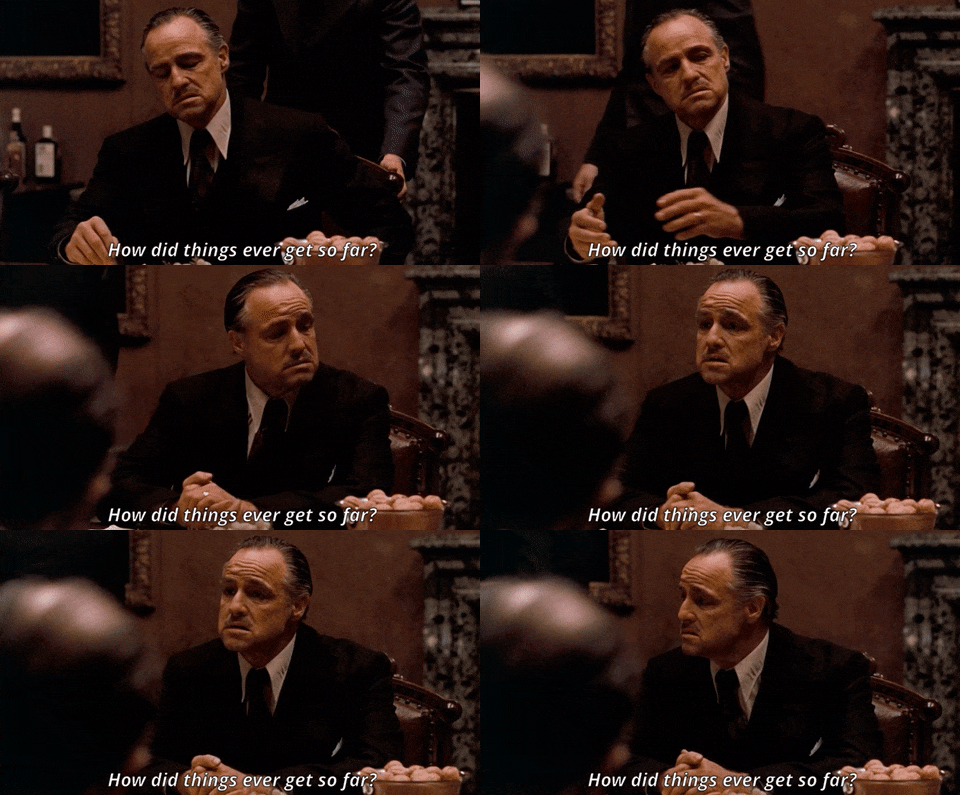
During those formative years, my parents worked hard to make ends meet, and there wasn’t a lot of money for extras.  When they wanted to splurge, they went to the movies.  And because they couldn’t afford a babysitter, they took my older brother and me along.  That’s how I ended up as a toddler watching The Godfather on the big screen, complete with its severed horse’s head and toll-booth machine gun rub-out of Sonny Corleone.  (Side note:  The Godfather remains one of my favorite movies today.)  I also recall seeing MASH, The Poseidon Adventure, and a few other 70’s classics with rather high body counts.


I’m not saying my fondness for scary stories, noir and gore are entirely a result of this early introduction to gross anatomy and celluloid shocks – some folks naturally like kittens, while others prefer extraterrestrial creatures with acidic blood.  But certainly, in my own writing, I reach back to those childhood influences for inspiration.

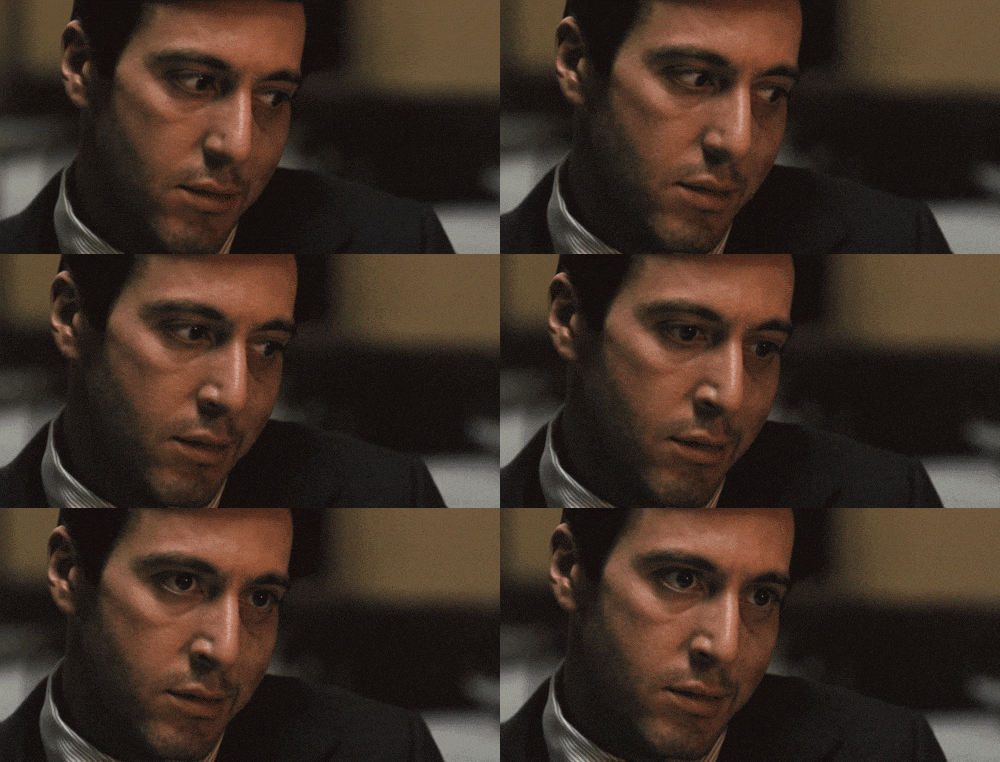
For example, has there ever been a scene more fraught with the anticipation of impending violence than the one in The Godfather where Michael Corleone sits down for dinner with Virgil “the Turk” Sollozzo and Captain McCluskey?  Watch as the tension slowly, excruciatingly ratchets up to eleven, punctuated by Michael’s nervous eye-shifting and the jarring crescendo of an approaching subway train. Quentin Tarantino has based his entire film career on emulating that kind of cinematic brilliance.  As a writer, I’d love nothing more than to put my audience on the edge of their seats the way that scene does to me.


Likewise, having a front row seat at live births, operations and autopsies (animal, not human) has given me an eye for detail when it comes to things such as medical procedures and the odor of various kinds of bodily fluids.  What many people might find disgusting, or at least off-putting, was a common topic of conversation around our dinner table.

Fast forward many years and I have two children myself.  When my kids were young, I carefully curated what they read and viewed.  Nothing too violent or disturbing.  They are in their teens now, so I let them make their own choices, but I still issue a verbal warning if they are about to enter the room when I’m watching zombies or a bloody shoot-out on TV.   Thus far, neither of them have demonstrated the same love for the grotesque that I possess, but time will tell whether these preferences are a matter of nature or nurture.

In the meantime, my youthful experiences continue to inform my work.  As a parent, I probably wouldn’t have considered taking my kids to see The Godfather.  But as a storyteller, I appreciate having a deep well of visceral memories from which to draw.  Without it, I’d probably be writing about stuff like dragons and iron thrones.  And who needs more of that nonsense?  (Kidding – I love you George R. R. Martin!)


Anyway, what I guess what I’m really trying to say is -- thanks mom and dad!

***

When U.S. Marshal Helen Morrissey is tasked with collecting a fugitive bank robber from a remote town in the Sierra Nevadas, she braces for a rough trip. After all, with a name like Kill Devil Falls, her destination must be a real hellhole.

Turns out that it’s worse than she imagined. Much worse. After barely surviving a white-knuckle drive in what she suspects is a sabotaged car, she’s stuck in a virtual ghost town populated by a handful of oddballs and outcasts. But it’s not until her prisoner turns up dead that Helen realizes she’s in real trouble. There are secrets buried below the surface of Kill Devil Falls. Secrets worth killing for.


Brian Klingborg works in the educational publishing field. He’s written books on Kung Fu, and he wrote for the Winx Club television series. Kill Devil Falls is his first novel. He lives in New York City. You can follow Brian on Twitter: @OjiiKlingborg.

Monday, February 6, 2017

Guest Post: Adrian Magson - The Bid

Adrian Magson takes time to share his journey on finding Midnight Ink and the idea for the Cruxys Solutions Investigation series.


I blame my parents. Well, if you have to blame them for something, it’s better if it’s something positive – and in my case it was for setting me on a life of writing.
They encouraged me from an early age to read, and by the age of eight I was into Zane Grey, Louis L’Amour and Leslie (The Saint) Charteris, among many others. I stumbled a bit over Hank Janson and Mickey Spillane, but only because a lot of it went over my head. At first. But along the way it struck me that writing books must be a great way to make a living.
That was a tad naive, but you live and learn.
For many years while holding down a variety of day jobs, I wrote romantic fiction for women’s magazines. Lots of it. It paid, and was a great apprenticeship, but it was a long time before I sold my first crime/mystery novel. It was even longer before I could make the leap into full-time writing. But persistence paid off.
That first mystery novel, featuring a female reporter, Riley Gavin, was followed by 4 more in the series, followed by a spy series (feat. Harry Tate - also 5), then a French police series (feat. Insp Lucas Rocco – 4). It was after writing the first in a new spy series (feat. Marc Portman – 4 so far), that I went for a change of tack. I decided to go back to writing about a female lead character.
But what to write about?
While mulling over a number of possible storylines, I opened a gym locker one day and found a card inside with Adrian scribbled on it. It wasn’t for me, but it started a chain of thought: what if the card was addressed to a specific person… a woman… and …? That was it, I was off.
And this is where Midnight Ink came in.
The story, titled ‘The Locker’ - Jan 2016 – (and the word locker has more than one meaning in this story) starts out as a kidnap novel, when a little girl, Beth Hardman, goes missing from her London home along with her Polish nanny. But it soon turns into something far deeper and puzzling. Unusually, there’s no ransom demand; no predator horror facing her mother, Nancy; simply an instruction that Beth’s father, Michael, must be told, and to keep the police out of it.
Nancy remembers that her husband once told her that if anything bad were to happen, she was to call a special number. This leads to a private security company called Cruxys Solutions, which specialises in insuring people in dangerous occupations. She calls them and before long two investigators arrive: Ruth Gonzales, a former soldier and British cop, and Andy Vaslik, a former NY cop and Dept of Homeland Security agent. The first problem they face is that Nancy has no way of contacting Michael, an aid worker, and has no precise idea where he is other than somewhere in Africa or the Middle East. The second problem is that the investigators can find no trace of a Michael Hardman anywhere; no documentation, no footprint, nothing. Yet Nancy insists he exists, and is out there somewhere.
So who is this mystery man and why has his daughter been kidnapped?
To tell would be giving away too much. But it’s very clear that whoever or whatever Michael Hardman is, snatching his daughter has been carefully planned, and that if he does  come back, he’ll be walking into a trap.
‘The Bid’ (Jan 2017) – the second in the Gonzales & Vaslik series, involves another disappearance, this time of Richard Chadwick, an American drone expert. Also missing is a shipment of small drones high-jacked from the cargo hub at Memphis International Airport. But these drones are not weekend playthings; used by film studios and wildlife rangers among others, they are the latest in high-tech machines capable of carrying small loads… with terrifying possibilities.
Ruth and Andy follow a trail from London to New York, and across the central United States, slowly tracking the missing expert and the men who have kidnapped him, from vague clues left behind. All the while their progress is being monitored by the FBI and DHS, who suspect Chadwick, a former USAF intelligence officer, has become involved in a terror plot.
As they soon discover, time is not on their side.
~~~~~~~~~~~~~~~~~~~
Adrian has had 21 books published, including a beginners guide for writers, writes regular book reviews and a monthly column for beginners in Writing Magazine (UK). For more information about him, see his website at: http://www.adrianmagson.com
~~~~~~~~~~~~~~~~~~~
Adrian lives in the Forest of Dean, in the west of England, with his wife, Ann.

~~~~~~~~~~~~~~~~~~~

Monday, December 19, 2016

Guest Post: Eve Seymour - Don't Tell Anyone

I would like to introduce Midnight Ink author Eve Seymour, who will be sharing thoughts on her latest title (written under the pseudonym Eleanor Gray) Don't Tell Anyone and her upcoming March title An Imperfect Past.


A Note from Eve Seymour

As I write, we are fast approaching Christmas, an occasion when, traditionally, families spend time with each other.  Without putting a downer on it, by January, divorce lawyers across the globe will be filling their appointment diaries with glee! 

It’s not exactly rocket science to fathom the reason why.  Couples who ‘rub along’ during the rest of the year, separated by work and, in many cases, child commitments often don’t fare so well when cooped up for the Christmas holidays.  Throw in the odd visiting relative, second time around spouses, stepchildren and half-siblings, occasionally too much booze, and, even in the most loving family unit, cracks appear, tensions exacerbate and old enmities surface.  In short, a toxic mix is there for the taking and with, sometimes, combustible results.  So where am I going with this?

My latest novels, ‘Don’t Tell Anyone’ under pseudonym Eleanor Gray, and ‘An Imperfect Past’, the sequel to ‘Beautiful Losers,’ revolve around family ties that sustain, but can also be dysfunctional.  Conflict is the name of the game in stories, and family units provide a rich seam for writers to mine.  Where else do passions run high and hatreds deep?   And I haven’t even started on secrets.

There is a saying:  ‘Write what you know’.  I’ve never been particularly sold on the idea because what most people ‘know’ is fairly commonplace.  When writing spy fiction, I did a lot of research and reading about what I patently didn’t know and then used my findings as a backdrop for unfolding drama.  However with my Kim Slade novels and ‘Don’t Tell...’ I confess I drew on my own family background.  Grace Neville in ‘Don’t Tell...’ loses her only daughter.  I have never lost a child, thank goodness, but, as a mother of five children, I could go some way to imagining what it must be like.  I was also able to use my own childhood experience of loss to feed into Grace’s grief.  In a similar vein, Kim Slade the clinical psychologist in ‘Beautiful Losers’ and ‘An Imperfect Past’ is consumed by the absence of a mom in her life and the secrets that unfold prior to her mother’s disappearance and, later, reappearance.   Despite my assertion ‘don’t write what you know’, I appear to have shot myself in the proverbial foot!

However you look at it, Kim and Grace’s stories are everyday tales with which many can empathize, the dramatic element only necessary for the purposes of fiction.  Whatever your story, I hope you and your family have a fabulous, healthy and peaceful 2017. 

 ***
Nearly lost in a fog of grief over the fatal stabbing of her daughter, art historian Grace Neville feels only sorrow as Jordan Dukes is found guilty of murder. Days after the sentencing, Grace receives a visit from Jordan’s father, who claims that his son is innocent and a grave miscarriage of justice has taken place. Jordan’s history of gang-related violence and the fact that he doesn’t have an alibi make his father’s plea hard to believe. But then why does somebody break into Grace’s home and go through her daughter’s belongings?

In Don’t Tell Anyone, Eleanor Gray explores the relationship between a mother and a daughter, and the secrets that drive Grace to seek the truth no matter what the cost.

Eleanor Gray/Eve Seymour (England) has written nine novels under several pseudonyms. She began writing after a successful career in public relations and raising five children. She has published articles in Devon Today magazine and had a number of her short stories broadcast on BBC Radio. Visit her at www.evseymour.co.uk. 

***
An Imperfect Past is available March 8, 2017

The past can be a foreign country and, for Kim Slade, a clinical psychologist specializing in young women with eating disorders, it's deadly, too.

No sooner than Kim returns to work after a mental breakdown, she's summoned to the deathbed of a former client, Mimi Vellender. Mimi's dying wish is that Kim finds her brother, Nicholas, who mysteriously disappeared five years ago.

Just as mysteriously, Kim's long-estranged mother, Monica, comes back into her life following the suspicious death of the judge she worked for as a live-in housekeeper. Is the sudden desire for a family reunion all it seems, or does Monica have something to hide?

Also, have a wonderful holiday season!

Friday, March 7, 2014

Guest Post: Emily Kimmelman


Thanks to Inkspot for having me on her blog today to talk to you about a contest I’m running in order to find a narrator for my Sydney Rye series of audiobooks. When I was driving cross country last year I listened to a lot of audiobooks. What I learned quickly is that the story didn’t matter as much as the voice. As a writer I hate to admit it but the truth is that no matter how compelling a tale if the voice doesn’t work then neither does the audiobook.

This realization was at the forefront of my mind when I decided to turn my own series into audiobooks. So I’m asking for your help. After narrowing the finalist down to four voice artist I’m going around the web begging for you to tell me what you think.

If you Haven’t read Sydney Rye yet don’t worry. You can download the first book, UNLEASHED, for free on Amazon, iTunes, B&N, or Kobo and see how she sounds in your head then vote for the best narrator.

Since I’m asking for your help I figured I should give something back. Voting enters you to win all sorts of great prizes including Amazon gift cards, signed books, and the finished Audio book!
I hope you’ll take the time to help me out by letting me know what you think. Thanks!

Here are your choices for narrator:

https://soundcloud.com/emily-kimelman-gilvey/tracks

Emily Strong

Emily Strong is an actor, voiceover talent, and first time filmmaker.  As a native of Michigan, she is a nature-lover at heart but has the mind of a city girl and moved to Chicago nearly three years ago because she wasn't smart enough to go somewhere warmer.  She takes full advantage of what the city has to offer by training at legendary places like The Second City and eating lots and lots of ethnic food (will travel all the way across the city to Pilsen for the best tacos!).  Her love of reading was the catalyst for her adventurous spirit and the reason why she is always stoked to tell stories in their many different forms. You can visit her at www.emilystrong.net

Erin Jones

Erin has narrated over 500 audio books including "The Hunger Games" trilogy for The National Library Services/Library Of Congress,  "A State Of Wonder," The Garden Of The Beasts," "Anna Karenina," "Ferdinand The Bull, and "Madeline."

Sonja Field
 
Sonja has two loves: acting and reading. Narrating audiobooks is her absolute passion. She has logged over 600 hours recording textbooks with an organization called Recording for the Blind & Dyslexic, and is currently in the process of recording a kids' action-fantasy-adventure novel, a steamy and mysterious paranormal romance, and a non-fiction about writing. She loves nothing more than bringing vivid worlds and unique characters to life. When she's not recording, Sonja can be found onstage, traipsing around Brooklyn, or entertaining children with a variety of dubious accents.


Erica Newhouse

Erica Newhouse is a film, televesion and theater actor living in New York City. She is a graduate of The Juilliard School.

Voting enters you to win all sorts of great prizes including Amazon gift cards, signed books, and the finished Audio book! Add to your chances of winning by joining Emily's email list, liking her Facebook page, or telling your friends about the contest.

Prize Details
Every vote, like, share, or sign up is an entry for the "grand prizes"
                        One person will win Signed copies of all 5 books
                        One person will win a $30 Amazon or B&N gift card
                        Four other winners will win paperback copies of UNLEASHED
                     
Anyone who votes +  signs up for Emily’s email list + likes Emily’s FaceBook page gets a copy of the audio book when it's completed!

Enter HERE for the Raffle Copter giveaway FIND THE VOICE OF SYDNEY RYE AUDIO BOOK CONTEST LINKS

Code:

<a id="rc-dc5f661" class="rafl" href="http://www.rafflecopter.com/rafl/display/dc5f661/" rel="nofollow">a Rafflecopter giveaway</a>
<script src="//d12vno17mo87cx.cloudfront.net/embed/rafl/cptr.js"></script>


More about UNLEASHED:

UNLEASHED is the first book in Emily Kimelman's best selling Sydney Rye series of mysteries.
When the series begins Sydney Rye is named Joy Humbolt. She does not like people telling her what to do, so it comes as no surprise that she was just fired from her last job. When she buys Charlene Miller's dog-walking business on Manhattan's exclusive upper east side, it seems like the perfect fit: Quiet environment, minimal contact with people.

But then one of her clients turns up dead, and Charlene disappears. Rumors say Charlene was having an affair with the victim--and of course, everyone assumes Joy must know where she is. Joy begins to look into the crime, first out of curiosity then out of anger when there is another murder and threats start to come her way.

When police detective Mulberry is assigned to the case, Joy finds a kindred spirit--cynical and none-too-fond of the human race. As they dig deep into the secrets of Manhattan's elite, they not only get closer to the killer but also to a point of no return. One last murder sends Joy Humbolt hurtling over the edge. Her only chance of survival is to become Sydney Rye.


The Rest of The Sydney Rye Series:

DEATH IN THE DARK (A Sydney Rye Novella, #2)
INSATIABLE (A Sydney Rye Novel, #3)
STRINGS OF GLASS (A Sydney Rye Novel, #4)
THE DEVIL’S BREATH (A Sydney Rye Novel, #5) Coming April 2014


Emily Kimelman Biography 
Emily Kimelman is the author of the best selling “Sydney Rye” series of mystery novels including UNLEASHED, DEATH IN THE DARK, INSATIABLE, STRINGS OF GLASS and the forthcoming THE DEVIL’S BREATH. Emily lives with her husband, Sean Gilvey, and their dog, Kinsey Millhone “Pup Detective”, on a trawler docked in the Hudson Valley during the summer. She spends her winters traveling to where ever the next Sydney Rye Novel takes place. Right now she is in Costa Rica working on Sydney Rye #6.

If you’ve read Emily’s work and liked it please contact her. She loves hearing from readers. You can reach Emily via email ejkimelman@gmail.com or on  twitter @ejkimelman. Follow her on Instagram to see pictures from Emily’s latest adventures. Visit www.emilykimelman.com to learn more about Emily and the Sydney Rye series.

Thanks for visiting, Emily.

Friday, February 14, 2014

Guest Post: Writer, Doctor, Inc.

Today, we are most pleased to welcome a guest post from the author of Wife of the Gods, Children of the Street, and the upcoming Murder at Cape Three Points.

By Kwei J. Quartey, M.D.

The other day, I was talking to someone about how I combine my writing and medical careers. “Being a doctor and a writer seems such a strange combination,” she commented. I’m not sure what she meant by “strange,” but the existence of physician-writers is hardly unprecedented. In fact, there is a long list of them, dating from antiquity through every century up to the present.

Sir Arthur Conan Doyle, prolific author and creator of Sherlock Holmes, arguably the most famous character in fiction, was only a couple years into his studies at medical school when he wrote the short story, The Mystery of Sasassa Valley. Evocative of the works of Edgar Allan Poe, it was accepted and published by an Edinburgh magazine. It was while he was struggling to get his medical practice off the ground in 1886 that Sir Arthur began the Sherlock Holmes novel that would catapult him to fame, A Study in Scarlet. In this story, Holmes utters a memorable declaration: "There's the scarlet thread of murder running through the colorless skein of life, and our duty is to unravel it, and isolate it, and expose every inch of it."

During the same period as Sir Arthur’s work, the great Russian writer Anton Chekov, was writing the short stories for which he is so recognized, but many do not know that he was also a full-time physician who continued to practice medicine throughout most of his literary career. He is quoted as having once said, “Medicine is my lawful wife, and literature is my mistress.”

Moving forward a couple centuries, we have many present-day examples of physician-writers: phenomenally successful Robin Cook, author of Coma, Shock and many other works; the late Michael Crichton (The Andromeda Strain, State of Fear, and of course, Jurassic Park); Khaled Hosseini, a contemporary of mine who once worked in the same medical group (The Kite Runner and A Thousand Splendid Suns.)

Some doctor-authors write primarily about medical matters and do so in a way that engages the layperson. A good example is Oliver Sacks (Awakenings), whose explorations of patients’ experiences tell stories in the framework of what might be called “romantic science.” But it is the physician who writes fiction who interests us the most. What makes a doctor want to turn away from the often very tough realities of practicing medicine to creating stories for publication?

In fact, the two vocations are not as different as one might think. Much of medical practice is about stories. In medical school, I was taught that as much as 70 percent of the diagnosis comes from the patient’s history of present illness (HPI), the narrative that forms the reason for which the patient is seeking medical treatment. A substantial chunk of my medical training was spent in schooling us students in how to “take” a medical history, and how to “present” it. In the electronic age, some of this curricular emphasis may have been lost, but the importance of the HPI hasn’t gone away, even if people think it has.

At teaching hospitals all over the world, bedside rounds are the venue in which the HPI takes center stage. Nowadays, much of teaching rounds has been replaced by time spent consulting laptops and smartphones. This electronic shift notwithstanding, the responsibility of narrating the HPI still falls traditionally upon the intern, who “presents the case” to the senior physician along with a substantial and sometimes intimidating audience of other doctors. Invariably the history begins with, “This is an x-year-old man/woman/girl/boy who was well until yesterday when he/she began to experience abdominal/chest/pelvic pain…” and so on. That introductory form is so standard as to be almost sacred. After the body of the HPI, other elements are added: the past medical history and the family and the social histories. The most admired presenters are those who describe the case so well that the audience immediately gains a clear picture of what is going on. It is gratifying when a senior physician praises a junior one for “giving a good history.”

But think about it: all the presenting physician has done, really, is tell a story. Sometimes the tale is so interesting, it holds the audience in rapt attention. The best medical histories are like good thrillers or mysteries, and the best case-presenters tell them that way. So, although you have probably never thought of your doctor in this way, he or she is actually a trained storyteller. Perhaps out of some deep-seated need, the physician-writer adapts this training to the pages of a novel.

Another aspect of the physician’s experience that equips him or her to write is called the clinical gaze. It is the opportunity and privilege afforded a doctor to observe a wide variety of people on an intimate physical, psychological and emotional level, particularly in the setting of the most universal component of human suffering: pain. This interaction provides the physician-writer with a wellspring of characters from which he or she can draw in the writing of a novel. The incorporation of some of these characters in the physician’s novel is not always conscious. It may be a subconscious synthesis of several patients he or she has encountered in the practice.

Of course, direct medical knowledge and expertise come in handy as well: in my own works, there is always a prominent medical component, whether it’s a detailed autopsy report, or an account of the heart disease of one of my most favorite characters, seven-year-old Hosiah. It comes as second nature.

The genre that parallels medicine most is the murder mystery. Indeed, it was Joseph Bell, a mentor of Sir Arthur Conan Doyle’s and a physician with particularly brilliant powers of observation, who was the inspiration for Sherlock Holmes’s extraordinary deductive powers. By extension, it is quite evident how a medical case and a murder mystery are analogous to each other. The doctor is the detective who “solves” the illness; the patient is both the victim and the scene of the crime; and the culprit is the causative organism or pathological process. Doctors look for clues in the patient’s appearance, the history, the physical exam and the lab tests. There is no fundamental difference between a physician eliciting a history from a patient and a detective interviewing a witness or suspect.

There may be one more reason why some doctors are drawn to writing, and here, I mean fiction in particular. We physicians have a driving desire to combat and overcome the chaos of illness, and in many ways, redirect the course of life and death. Some of us never give up, and in the crushing defeat that must invariably befall us at some juncture, we may be thrown into the abyss of depression. It is true: we don’t like to make a mistake or miss a diagnosis. After all, a patient’s life may be at stake. Yet despite all our training and the wonders of modern medicine, we remain woefully mortal and vulnerable to defeat.

But in fiction, physician-writers can turn the tables on life and be in complete, godlike control. In the murder mystery especially, we create the setup—the heinous crime for which justice must be done—and set our intrepid detective on the perpetrator’s trail. Our detective does not rest until the murderer is identified in the delicious denouement, by which time we have also managed to tie up the loose ends in our character’s lives. What could be more gratifying?

But despite medicine informing the process of writing, there can still be an unsustainable tension between the two careers. Both take time, and sometimes there aren’t enough hours in a day to accommodate them both. Dr. Hosseini, for example, simply has no time to practice medicine anymore, what with forty-city book tours.
Is that tension affecting me as well, and if so, how much? Let me put it this way: in 2014, being a doctor will by necessity gradually cede to the burgeoning sovereignty of my writing, and in the very near future be forced to genuflect in submission.

BUY HIS BOOKS HERE


Wife of the Gods

Children of the Street
Murder At Cape Three Points
Out March 2014

About Dr. Quartey

kwei

Kwei Quartey is a crime fiction writer and physician living in Pasadena, California. Having practiced medicine for more than 20 years while simultaneously working as a writer, he has attained noteworthy achievements in both fields. Dr. Quartey balances the two professions by dedicating the early morning hours to writing before beginning a day in his clinic.

Kwei Quartey attended medical school at Howard University in Washington, D.C. In 1990, he began practicing medicine in California with HealthCare Partners. Dr. Quartey later founded the facility’s wound care center while working as an urgent care physician.

As a crime fiction writer, Kwei Quartey made the Los Angeles Times Bestseller List in 2009. The following year, the G.O.G. National Book Club awarded him the title of Best Male Author. Having published Wife of the Gods and Children of the Street, he is anticipating the release of a third novel in the series, Murder at Cape Three Points, in March 2014. Death at the Voyager Hotel, a mystery e-novella not belonging to the series, was published July 2013. Dr. Quartey is also a member of the Los Angeles chapter of Sisters in Crime, a fiction writers’ organization.