
Thursday, December 13, 2018
eBook Deals: Grab the First Five Books of the Downward Dog Mystery Series on Sale, Starting at $0.99!
Everyone loves a deal! for a limited time, grab the first five ebooks of the Downward Dog Mystery Series by Tracy Weber while they're on sale!


Friday, December 7, 2018
North...to Alaska: A Guest Post from CATCH ME IF YUKON Author Maddy Hunter

Alaska became our 49th state when I was in grade school, but I didn't visit it until I needed research material for the next book in my Passport to Peril mystery series, Catch Me if Yukon. (I realize the Yukon isn't in Alaska, but the title was too good to pass up.) I wasn't surprised by the glorious scenery or the fact that people could live in extremely remote areas and actually flourish, but I was surprised by a couple of things that I'd like to share with you.
There were no mosquitoes!
(Okay, there was one rogue mosquito lurking in the bathroom of our cabin in Denali, but it was flying solo.) People had warned me that mosquitoes in Alaska were at least an inch long and so numerous that they traveled in death squads. (Perhaps they were thinking of Lapland, where hats with mosquito netting are a welcome addition to the fashionable tourist's wardrobe.) Happily, all the bug spray I'd packed went unused. There were more mosquitoes in my little flower garden in Wisconsin last summer than in the whole state of Alaska.
Alaska has an unexpectedly international flavor. Who knew?
I'd imagined rugged mountain men types. Flowing beards. An array of suspenders. Twangy speech. What I found was a portly restaurateur with a charming accent who was seated at a cooking station in the middle of his eatery in Seward, whipping up crepes and Belgian waffles as if he were demonstrating the technique in a storefront window. And the reason why Belgian waffles were his specialty? He was an immigrant. From Belgium.
In a town called Girdwood we ate in a restaurant named The Bakery, which offered outdoor seating amid a profusion of hanging baskets and oversized flower pots. It reminded me of the iconic restaurant in Oberammergau, Germany, whose balconies dripped with flowers. After reading the headlines of a framed newspaper inside the restaurant, I learned the reason why The Bakery reminded me of Europe. Its owner had emigrated from…Germany.
Near Girdwood we participated in a dog mushing adventure, run by a young man who was an annual contestant in the Iditarod. He spoke with an accent I couldn't identify, so when I asked him where he was from, he said Normandy. And not Normandy, Texas or Normandy, Tennessee. Normandy, France. An Alaskan dog musher from Normandy, France. Seriously. How does that happen?
Farther north, in Denali, the only road that snakes through the national park terminates at a resort whose dining hall is almost as big as the park itself. There's an army of wait staff who scurry around the room, refilling chafing dishes and clearing tables, but there's so little help available domestically, the resort is forced to hire workers from Eastern Europe. I tried speaking to our waitress, but she spoke so little English that our conversation was limited to smiles and hand gestures, which no doubt explains why buffet-style is the meal plan of choice at the facility.
In a little place called Healy, we crammed into a muddy UTV and drove three bumpy miles into the woods to arrive at our zip-lining venue, where our instructor for the adventure turned out to be a young woman from…wait for it…Bulgaria! She traveled to Alaska on a work visa, fell in love with a man and married him, so she was there permanently.
I came to the conclusion that foreign visitors find Alaska so hypnotic that they decide to stay. So if you happen to be passing through out 49th state, don't be surprised if you hear a delightful assortment of languages and accents. If you stay long enough, you might even hear the hard vowel sounds of a few transplanted Midwesterners. The two bus drivers who transported us through Denali and down the road to Healy? Turns out they used to live right down the street from me in Wisconsin. Go figure.
***
 Emily and her traveling seniors must solve yeti nother mystery as they trek through the Alaskan wilderness
As tour escort Emily Andrew-Miceli leads her globetrotting band of Iowa seniors into the wilds of Alaska, she discovers that whales aren't the only killers on the prowl. When a tour member turns up dead on a mountainous hiking trail, Emily blames herself for the mishap—until she learns that something far hairier might be the cause.
One of the seniors snaps a photo of what looks like Bigfoot, raising questions about what happened to the victim. But the elusive sasquatch is just a legend, isn't it? Between whale watching in the glacial waters near Seward and ziplining in the primal forests of Denali, Emily finds herself locked in a game of cat and mouse with a killer who may or may not be mere myth.
Praise for the Passport to Peril Mystery Series:
"A bit of humor, a bit of travel information and a bit of mystery add up to some pleasant light reading."—Kirkus Reviews
"The cast of characters is highly entertaining and the murder mystery mixed with good humor!"—Suspense Magazine
"Maddy Hunter's Passport to Peril series is a first-class ticket to entertainment."—Carrie Bebris, award-winning author of the Mr. & Mrs. Darcy Mystery series
Maddy Hunter has endured disastrous vacations on three continents in the past five years. The first six titles in the Passport to Peril Mystery series are available from Pocket Books; books seven through twelve are available through Midnight Ink Books. The first in the series, Alpine for You, was an Agatha Award finalist and a Daphne du Maurier Award finalist. Also, Hula Done It?, Pasta Imperfect, and Top O' the Mournin' were named to the Independent Mystery Bookseller's Association bestseller list. The author resides in Madison, Wisconsin. For more information, go to MaddyHunter.com.
That Crazy Little Thing Called Plot: A Guest Post from SECOND GOODBYE Author Patricia Smiley

Buried deep inside a file drawer in my office is a folder filled with yellowing true-crime newspaper clippings meant to inspire the plot of my next novel. The only problem is once they're neatly clipped and stored I rarely look at them again. Mostly, my books are created from a disparate array of alluring subjects and events I've experienced firsthand. This process is especially true for the genesis of Second Goodbye.
Like most authors, I embrace my characters. Davie Richards is a gutsy, principled, but flawed second-generation LAPD detective who’s devoted to seeking justice for murder victims. The people who inhabit her world—Bear, Vaughn, and Frank Giordano—captivate me. I care about what happens to all of them, including those who were never meant to have an afterlife beyond one novel. But there was one character I just couldn't jettison—LAPD Homicide-Special Detective Jon Striker. Striker worked a case with Davie in Outside the Wire, but after the novel ended, his back-story was still mostly unknown, especially the origin of that mysterious tattoo on his arm. All I initially knew about Second Goodbye was that Striker would feature prominently.
Around this time, I attended a fan convention in New Orleans where I met a cop who suggested I look into suicides in gun stores for possible plot ideas. It was an intriguing idea that eventually became an essential element of the book.
Money laundering has always fascinated me. I earned an MBA, so I know about balance sheets and profit-and-loss statements. I also worked for fifteen years as a volunteer and Specialist Reserve Officer for the Los Angeles Police Department, including five years assigned to the detective squad room, investigating financial crimes. On the surface, the basics of washing dirty cash seemed straightforward. But the intricacies were more difficult to chart, which is the whole point if you're a crook. I began researching the issue until I felt comfortable incorporating a money-laundering scheme into the story.
Ideas for Second Goodbye began stacking up. I had Striker, a death in a gun store, and money laundering. While working on the manuscript, I went on a sailing trip to the British Virgin Islands and learned that the area was a money-laundering haven for criminals transferring cash to and from the mainland and complicit local banks. That's when the plot "thickened." Just as it had in Outside the Wire, Davie's investigation becomes too complex to handle at Pacific Division and is transferred downtown to Homicide-Special, where she and Striker again partner to solve the case. Accordingly, they follow the money to the island of Tortola.
Every author has a unique writing process. For me, the plot comes together at random when I keep my eyes and subconscious open to crazy little ideas—even while on a sailboat in the BVIs.

***

Assume nothing—that's the touchstone for every homicide investigation Detective Davie Richards undertakes. She approaches her latest case the same way, determined to learn as much about the victim as she does about the killer. But there's nothing about thirty-four-year-old Sara Montaine or her death that makes sense.
Was Sara a saint caring for her dying husband or a gold-digger with a sketchy background? Did she commit suicide or was she murdered? Before her marriage, Sara lived comfortably without any obvious source of income, unusual for an orphan raised in foster care. As Davie digs deeper, she unearths Sara's troubled past and a viper's nest of villains who are willing to kill to keep their secrets hidden.
Praise:
"Sassy and analytical, L.A. Detective Davie Richards utilizes 'shoe leather and minutiae' to unravel a brilliantly staged fake suicide. Seamless prose, tightly crafted clues, and surprising twists make LThe Second Goodbye a memorable police procedural. Brew the coffee for the graveyard shift, as you'll be up all night reading."
—K.J. Howe, best-selling author of The Freedom Broker and Skyjack
"Patricia Smiley tackles Michael Connelly territory and succeeds with a realistic, compelling police procedural in the badlands of contemporary Los Angeles. Detective Davie Richards is a smart, no-nonsense heroine, and the storytelling had me turning the pages at the expense of mundane activities like sleeping. The Second Goodbye is an intriguing mystery laced with well-researched law enforcement practices."
—Raymond Benson, author of In the Hush of the Night and The Black Stiletto Serial
"The Second Goodbye is a straight ahead jolt of police procedural adrenaline! Like Michael Connelly, Patricia Smiley grabs a hold of you and pulls you into the story without tricks or gimmicks. Just a great story told by a great storyteller. The Second Goodbye catapults Smiley onto the top tier of crime writers!"
—Matt Coyle, Anthony Award-winning author of the Rick Cahill crime series
Patricia Smiley is a bestselling mystery author whose short fiction has appeared in Ellery Queen Mystery Magazine and Two of the Deadliest, an anthology edited by Elizabeth George. Patricia has taught writing classes at various conferences throughout the US and Canada, and she served on the board of directors of the Southern California Chapter of Mystery Writers of America and as president of Sisters in Crime/Los Angeles. Visit her online at www.PatriciaSmiley.com.
Wednesday, December 5, 2018
eBook Deals: Grab the First 3 Accidental Alchemist Books, Starting at Just $0.99!
Everyone loves a deal! for a limited time, grab the first three ebooks of the Accidental Alchemist Mystery Series by Gigi Pandian while they're on sale!


Monday, November 26, 2018
The Great Christmas Cookie Debate: A Guest Post from AS THE CHRISTMAS COOKIE CRUMBLES Author Leslie Budewitz

You’d think it would be pretty obvious, right—what's a Christmas cookie and what isn’t?
Alas, no.
Years ago, I participated in a Christmas cookie exchange hosted by a woman I worked with. Trays of spritz, gingerbread boys, and sugar cookies in festive shapes covered her dining room table.
And there, among them, sat a plate of peanut butter cookies. Not just any peanut butter cookies, but flat, stretched-out cookies too crisp from over-baking.
Ho, ho, ho, and no, no, no!
The memory of that sad plate, alone on the table after all the candy cane cookies and jam thumbprints had been snatched up, prompted me to include a cookie exchange in As the Christmas Cookie Crumbles, fifth in my Food Lovers' Village Mysteries. I've been as surprised as Erin Murphy, my main character, to discover that not everyone agrees with her about Christmas cookies.
Don't get us wrong. We both love peanut butter cookies, and the flourless version her young cousin Molly brings to the Murphys' annual friends-and-family cookie exchange is yummy and easy. We bow to no one in our love of a good chocolate chip cookie. And snickerdoodles? Joy, rolled in cinnamon sugar.
But they aren’t Christmas cookies.
What, to Erin, me, and our mothers, makes a cookie a Christmas cookie? Some are clearly seasonal—only an author testing a recipe is likely to color dough red and twist it into candy canes in June. Christmas cookies feature an ingredient not used in an everyday cookie. Fruit cake has long been relegated to December—or in some households, to the trash bin, but I don't hold with that either—so that's when fruitcake cookies or bars surface. Candied fruit, dates, and nuts are holiday staples.
A gingerbread boy or girl served any other time of year? Just plain wrong. A sugar cookie in the shape of a star or a bell, trimmed with frosting or sprinkles? You know I'm right. And spritz? Case closed.
Have you ever eaten a jam thumbprint any other time of year? Me, neither. Other cookies are holiday stars in certain European traditions—pfeffernusse, Berlinkranzer, lebkuchen, pizzelles.
Then there's the snowball and its pseudonyms—Russian tea cakes, Mexican wedding cakes, and pecan sandies. So important to the holiday that they even play a role in my latest mystery. I can hardly wait to try the "Dirty Snowball" one reader created by adding cocoa powder added to the powdered sugar. But I will wait, until December 1.
And we haven't even talked about fudge, divinity, or peppermint bark.
Now it has been brought to my attention that some cookbooks call the snickerdoodle a Christmas cookie. If it meets your criteria for special, and you only make it in December, then by all means, go ahead and give it that jolly label. After all, traditions do vary. Frankly, I think you'd be unnecessarily depriving yourself of the joy of those little balls of crackly dough wrapped in sugar and spice and everything nice the rest of the year.
Or maybe that just leaves more for me. And Erin. And you, if you stop by. Because no matter what the cookie, no matter what the season, cookies taste better when they're shared.
***

Erin is one smart cookie, but can she keep the holiday spirit—and herself—alive till Christmas?
In Jewel Bay, all is merry and bright. At Murphy's Mercantile, AKA the Merc, manager Erin Murphy is ringing in the holiday season with food, drink, and a new friend: Merrily Thornton. A local girl gone wrong, Merrily has turned her life around. But her parents have publicly shunned her, and they nurse a bitterness that chills Erin.
When Merrily goes missing and her boss discovers he's been robbed, fingers point to Merrily—until she's found dead, a string of lights around her neck. The clues and danger snowball from there. Can Erin nab the killer—and keep herself in one piece—in time for a special Christmas Eve?
Includes delicious recipes!
Praise:
"Budewitz's finely drawn characters, sharp ear for dialogue, and well-paced puzzle make Jewel Bay a destination for every cozy fan."
—Kirkus Reviews
"Clean-as-a-whistle dialogue, endearing characters, and a solid plot make this cozy a winner."
—Publishers Weekly
"Cozy readers will relish the small-town, Christmastime frame accompanying details of frenzied wedding planning and running a family food business. And, of course, recipes, too."
—Booklist
Leslie Budewitz blends her passion for food, great mysteries, and the Northwest in the Seattle Spice Shop Mysteries and the Food Lovers' Village Mysteries, set in Jewel Bay, Montana. The 2015-16 president of Sisters in Crime and first author to win Agatha Awards for both fiction and nonfiction, she lives and bakes in NW Montana.
Friday, November 9, 2018
Cats, Florida, and the Tarot: A Guest Post from FOOL'S MOON Author Diane A.S. Stuckart

Cats. Florida. Tarot.
Those three words are the soul of Fool's Moon, the first in my new Tarot Cats Mystery series. It's been one of my favorite books ever to write, mostly because each of those words has special meaning to me. And since this is a "get to know you" kind of blog post, let me explain so you can learn about me, as well as about my series.
Cats. I grew up as a Crazy Cat Kid (can I trademark that phrase?). Numerous of my childhood photos show me carrying, petting, or otherwise engaging with a feline. Unfortunately, my parents weren't exactly animal lovers, which meant that when I grew up that I surrounded myself with critters.
My current clowder (the official term for tons o' cats) consists of my orange tabby brothers, Butch and Sundance, and sibling black cats Brandon Bobtail and Ophelia. And, yes, the latter pair are the inspiration for Brandon and Ophelia in Fool's Moon. But as plotting circumstances worked out, the personalities of my real life kitties and their fictional counterparts swapped themselves. The Brandon in Fool's Moon is smart and levelheaded. Real life Brandon is a loving but feisty little (well, big) butthead. Similarly, the real life Ophelia is sweet and mostly defers to her brother, while fictional Ophelia is the mouthy one.
Florida. I've lived in South Florida for more than a dozen years now, moving from Texas, where I was born and lived most of my life. Being a Texas native has always been a crucial facet of my identity, in part because our ranks are dwindling as more people move to the Lone Star State. I have found, however, that the Sunshine State has a similar pride of birth, with even fewer native Floridians to be found. The folks here are equally independent (remember that the Keys once seceded from the nation), and even more of a cultural mix, from Native Americans to Cubans to Haitians to New Yorkers. Perhaps it's that mix that makes the state more than a little quirky (when was the last time someone in Connecticut tossed a live gator through a fast food drive-thru window?). And that quirkiness made me eager to set the Tarot Cats Mysteries here in my new home.
Tarot. I've been fascinated by the Tarot ever since I was a teen in the 70s. As a storyteller, I'm drawn to its "hero's journey" imagery and the deep symbolism of the cards. However, like my human protagonist in Fool's Moon, Ruby Sparks, I don't see Tarot decks and Tarot readers as anything supernatural. As Ruby would tell you, the Tarot is simply a tool for self-discovery.
But what's this about cats reading Tarot in Fool's Moon? Yep, Ophelia learns to interpret the cards by watching Ruby and thinks she does a much better job of it than her human. And, full circle, her readings serve to set her and Brandon off on a literal journey of their little part of Florida.
***
 Two tarot-savvy cats and their tenderhearted human outwit a cruel criminal in this animal-centric whodunit.
Most days, Ruby Sparks feels like the sign that says "Tarot Card Reader Extraordinaire" should say "Tarot Card Reader Fairly Competent." But as challenging as it is to take care of her half-sister's New Age shop—and her growing menagerie of enchanted pets—Ruby never worries that she's bitten off more than she can chew...until a customer wants her to divine the truth about a murder.
When her own life is threatened with a double dose of danger, Ruby begins to wonder if she's being played for a fool. Luckily, she has Ophelia and Brandon—sibling black cats with a talent for tarot—and a feisty pit bull friend who all lend a paw in collaring the culprit before Ruby finds herself taking her final cat nap.
Praise:
"[Stuckart] writes throughout with charm and warmth. Anyone with a pet will enjoy."
—Kirkus Reviews
Diane A.S. Stuckart is the New York Times bestselling author of the Black Cat Bookshop Mystery series. She's also the author of the award-winning Leonardo da Vinci historical mysteries, as well as several historical romances and numerous short stories. Her Tarot connection is even more sprawling. She's been an on-and-off student of Tarot since she was a teenager, though she confesses to being more of a collector of decks than a reader. She will, however pull out the cards for a friend on occasion.
Diane has served as Chapter President of the Mystery Writers of America Florida chapter, is a member of the Cat Writers' Association, and also belongs to the Palm Beach County Beekeepers Association. She lives west of West Palm Beach with her husband, dogs, cats—including the real-life Brandon Bobtail and Ophelia—and a few beehives. Visit her online at http://www.tarotcats.com.
Friday, November 2, 2018
Inspiration from...Beyond? A Guest Post from A VINTAGE DEATH Author Mary Ellen Hughes

When I started putting together my thoughts about a new mystery series, I knew that at least two elements would be in it: a female protagonist and a small town setting. I had nothing more than that, but little by little ideas began to form. One of the basic "rules" of fiction writing is to write what you know. This can refer to what you already know or to what you can research and learn. I started with things I knew and sifted through them for something intriguing. A story I'd heard some years ago fit that bill.
There's a very old house down the road from me. Old enough to be historical, but in a small way, meaning George Washington never slept there. The couple that bought it happened to move in on a stormy night—yes, a dark and stormy night! This old house had a few pieces of furniture left behind, and as the couple carried in their boxes, they heard a very faint sound of music. They eventually tracked it down to an old, roll-top desk, which was closed and locked.
The husband managed to pry it open, and inside they found an old music box—which was playing. Nobody had wound it, of course, so it was a bit spooky, to say the least. They eventually decided that "Gerard," a long-ago deceased owner who may or may not have been seen on the premises over the years, had welcomed them, and they took it as a very positive sign.
That story stayed with me, and I decided to work it into my new Keepsake Cove series. I set A Fatal Collection in a collectible music box shop. My protagonist's Aunt Melodie, who dies early in the story, seems to communicate at crucial times to her niece, Callie, through her favorite music box. Or does she? Callie never knows for sure, but she kind of likes the idea of being looked after in that way.
With that start, I created Keepsake Cove, a town-within-a-town of shops that specialize in all kinds of collectibles, including the music box shop. The shopkeepers seem to be good people. Or are they? This is a mystery, of course, and bad things have to happen. Once I had my beginning, I was on a roll, and all because of that mysterious music box playing on its own one night many years ago.
A Fatal Collection is now followed by A Vintage Death. I hope you'll want to find out if the music box continues to warn Callie (if that’s what it's actually doing,) and meet the new people who've come to Keepsake Cove. One of them happens to be an author, who I enjoyed creating from a mix of the many different authors I've met over the years. Will you recognize them? Maybe not, since I've also added ingredients from my imagination. But they definitely helped inspire me as I once again followed the rule of "write what you know."
The intriguing thing to me is how "what you know" can quickly turn into something you never imagined before. But that's all part of the fun of writing fiction!
***
 Callie Reed has put together a special event, but a killer is ripping it apart at the seams
As the new owner of a music box store in Keepsake Cove, a quaint town full of collectible shops on Maryland's Eastern Shore, Callie Reed is eager to get more involved in her community. So she volunteers to plan the fall street decorations and welcome a visiting author who's come for a special book signing. But the celebratory mood is cut short when the local B&B owner is found dead, killed with a pair of vintage scissors.
Suspicion is cast on the victim's estranged wife, Dorothy, who owns Keepsake Cove's vintage sewing shop. Callie is sure Dorothy is innocent, and the visiting author agrees. Together, they begin their own investigation, only to discover that many people in Keepsake Cove have secrets. Secrets that are worth killing to keep.
Praise for the Keepsake Cove Mystery Series:
"Hughes kicks off her new Keepsake Cove series with a charming locale."
—Kirkus Reviews
Mary Ellen Hughes is the bestselling author of the Pickled and Preserved Mysteries (Penguin), the Craft Corner Mysteries, and the Maggie Olenski Mysteries, along with several short stories. A Fatal Collection is her debut with Midnight Ink. Visit her at www.MaryEllenHughes.com.
Friday, October 19, 2018
A Strong Sense of Place: A Guest Post from Kathleen Ernst

Authors sometimes debate which is most important: character or plot. Character comes first, in my opinion, but the discussion itself often ignores an element that should rank right up there in the top tier: setting.
As a reader, I gravitate toward books that provide me with a strong sense of place, books that transport me somewhere new with complete authenticity. I try to do the same with the Chloe Ellefson mysteries.
Chloe is a curator at a large outdoor ethnic museum called Old World Wisconsin, a real site where I once worked as a curator. When writing the first book in the series, writer friends urged me to create a fictional historic site. I couldn't imagine doing so. I knew, and wanted to share with readers, real and special historic places.
As the series has progressed, books have featured other museums and historic sites in the Midwest. The ninth book in the series, The Lace Maker's Secret, is set in northeastern Wisconsin, home to the largest rural community of Belgian-Americans in the nation. Chloe has been hired to develop a furnishings plan for a Belgian Farm being restored at Heritage Hill Historical Park in Green Bay.
The Lace Maker's Secret includes a strand of historical fiction braided with Chloe's story. It introduces Seraphine, who immigrated to Wisconsin in the 1850s with her new husband. The Belgians came looking to farm, and were granted acreage in forested land instead. This is how I described their arrival:
"Jean-Paul," Seraphine hissed."This can't—" She stumbled, fell to one knee, clambered back to her feet. "This can't be right." The uncertainty in her husband's eyes did nothing to stay her growing unease.
…They were following their guide through a forest, deeper and deeper, away from the bay of Green Bay which had, for a time, glimmered through the trees. There was no trail, just several inches of slushy snow to hide roots and rocks. They shoved through thickets and skidded down ravines and clambered over windfalls. The trees were so tall and thick that midday was gloomy as twilight. Every strange bird call startled Seraphine. Every cracking branch made her jump. The cold pressed into her bones, numbed her toes. She carried a bulky sack over one shoulder. The skillet dangling from one mittened hand slipped from her grasp over and over. …How could the guide possibly know where he was going? They'd been walking for hours. There were no landmarks. The endless forest had swallowed them.
The Belgian immigrants faced hunger, epidemics, and a devastating forest fire. I couldn't hope to convey Seraphine's story without imagining the place where she landed.
While researching the mystery I spent a lot of time in Green Bay talking with site staff and volunteers, digging through the employee library, visiting local historical societies. But one of the most meaningful things I do when developing a new book is less academic: I settle in.
There is something powerful about walking the ground where 19th-century immigrants once walked. There is something powerful about gaining insight into their environment, and how it impacted their lives. There is something powerful about simply hunkering down with a notebook in hand to record the specific sensory details that will help bring a description to life.
I hope readers will enjoy being conveyed to another time and place as much as I do.
***
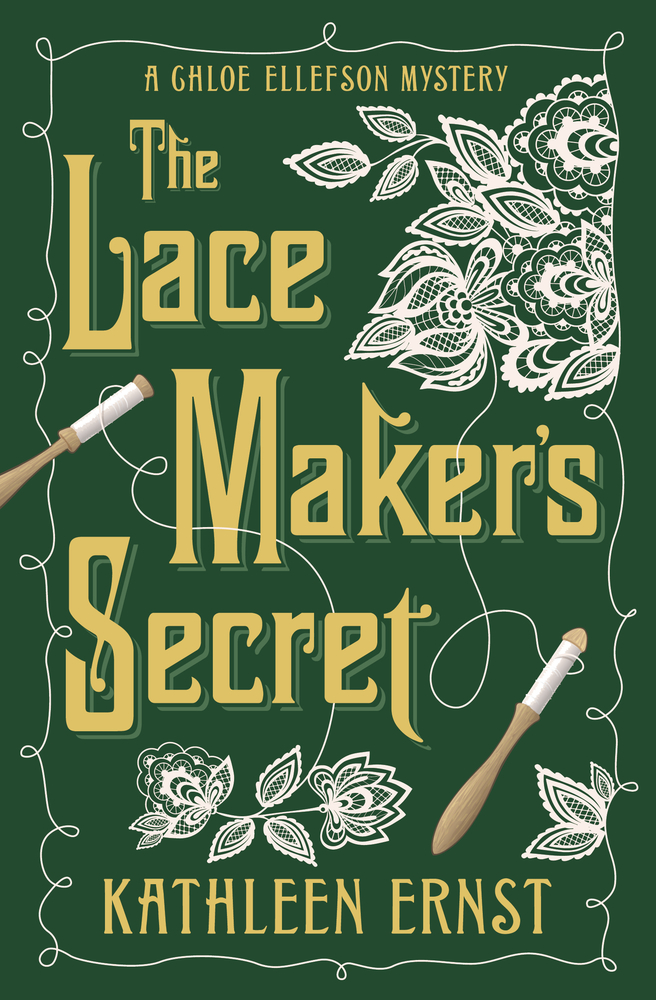 Greed, Uncertainty, and Death Get Tangled in the Mystery of a Rare Piece of Belgian Lace
Curator Chloe Ellefson needs distraction from the unsettling family secret she's just learned. It doesn't help that her boyfriend, Roelke McKenna, has been troubled for weeks and won't say why. Chloe hopes a consulting job at Green Bay's Heritage Hill Historical Park, where an old Belgian-American farmhouse is being restored, will be a relaxing escape. Instead she discovers a body in a century-old bake oven.
Chloe's research suggests that a rare and valuable piece of lace made its way to nearby Door County, Wisconsin, with the earliest Belgian settlers. More importantly, someone is desperate to find it. Inspired by a courageous Belgian woman who survived cholera, famine, and the Great Fire, Chloe must untangle clues to reveal secrets old and new...before the killer strikes again.
Praise:
"In this heartfelt tale of labor and love, Ernst produces one of her most winning combinations of historical evocation and clever mystery."
—Kirkus Reviews
Kathleen Ernst is an award-winning and bestselling author, educator, and social historian. She has published over thirty novels and two nonfiction books. Her books for young readers include the Caroline Abbott series for American Girl. Honors for her children's mysteries include Edgar and Agatha Award nominations. Kathleen worked as an Interpreter and Curator of Interpretation and Collections at Old World Wisconsin, and her time at the historic site served as inspiration for the Chloe Ellefson mysteries. The Heirloom Murders won the Anne Powers Fiction Book Award from the Council for Wisconsin Writers, and The Light Keeper's Legacy won the Lovey Award for Best Traditional Mystery from Love Is Murder. Ernst served as project director/scriptwriter for several instructional television series, one of which earned her an Emmy Award. For more information, visit her online at KathleenErnst.com.
Friday, October 12, 2018
Are Ghosts Real: A Guest Post from E.J. Copperm

"Do you believe in ghosts?"
I actually get that question considerably more often than most walking-around civilians. I understand the question, and no, I'm not ever going to give you an answer.
I write a series of mystery books about a woman who runs a guesthouse on the Jersey Shore that just happens to be haunted. So people—and I get why—want to know where I stand on the Casper-and-his-Friends question.
I don't answer because I don't want to annoy any of my readers. If I say I do think there are undead spirits inhabiting various structures around the world, the ones who think that's silly will think I'm silly. If I say no, the people who read the books for the ghosts could easily feel betrayed. So I'm staying mum on the Ghost Question, and by that I don't mean the movie with Patrick Swayze. Whoopi definitely earned her Oscar.
But in the latest Asperger's Mystery series (which I write with Jeff Cohen) novel, The Question of the Dead Mistress, the main character Samuel Hoenig, who has personality traits that some would say place him on the autism spectrum, has to answer the question, and he has a very quick answer.
No.
Samuel, whose mind deals with facts and that which is provable, refuses to admit to his brain the concept. People die, and that's it. Samuel has no definitive proof that anything else might be the case, so it's not an issue for him.
When a client walks into the office of Samuel's storefront business Questions Answered (it's all there in the business name) and asks if her husband is having an extramarital affair with a deceased woman, Samuel answers her question immediately, and without charge: No, he's not, because there's no such thing as a ghost.
But Samuel has a problem: His most trusted associate, Ms. Washburn, does believe, based on an experience she had as a teenager. So she wants to attack the question and answer it definitively for the woman who has ventured into the office with concerns about her husband and a spirit.
They arrive at what seems like a perfectly equitable solution: Janet (Ms. Washburn) will research the question and Samuel will work on some of the business' other files. Given Janet's intelligence and experience, that would work out just fine—until the husband in question ends up just as dead as the woman his wife suspected he was seeing on the side. And he has not died due to natural causes.
The Ghost Question never really leaves the story, but it is added to the question of the also-dead husband. Astute readers will note that the authors do not necessarily settle the existential issue, and that's intentional.
br>
***
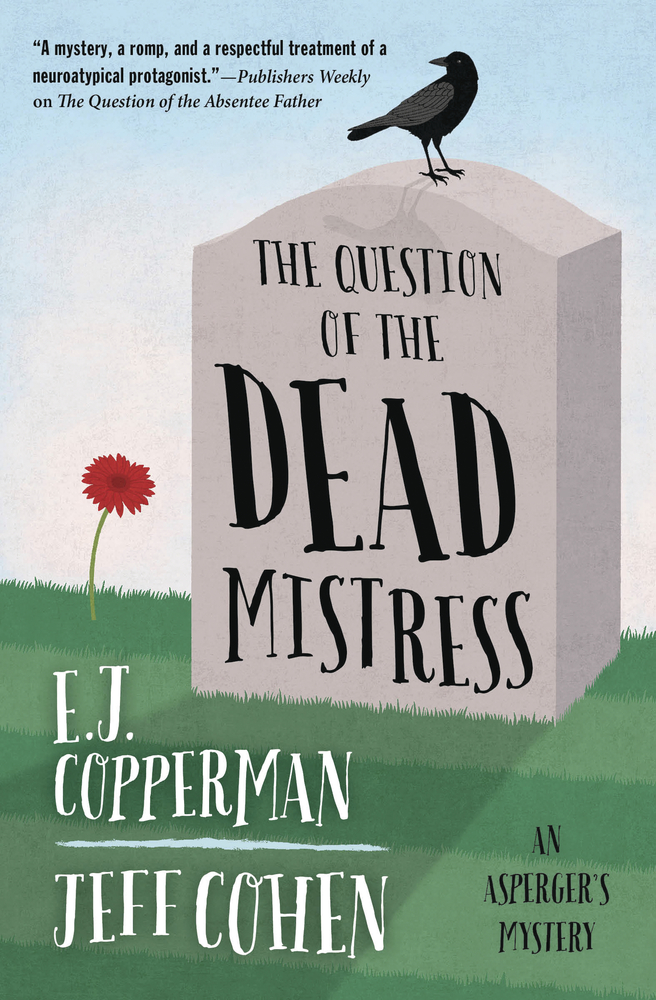 "Is my husband having an affair with a dead woman?"
For Samuel Hoenig, the proprietor of a unique agency called Questions Answered, the answer to this most recent question is simple. Since there's absolutely no evidence that apparitions exist, it would be impossible for Ginny Fontaine's husband to be having an affair with one.
But Samuel's associate, Janet Washburn, isn't so easily convinced.
Wrestling with his complicated feelings for Ms. Washburn, Samuel proposes that she take the lead on the question. As soon as her research begins, the husband in question ends up dead, leaving Janet and Samuel wondering if they stand a ghost of a chance at unraveling this twisted tale of danger and deceit.
Praise for the Asperger's Mysteries:
"Readers will delight in watching Copperman's literal-minded hero grapple not only with unpredictable and nuanced human thinking, but with logic from beyond the grave."
—Kirkus Reviews
E.J. Copperman and Jeff Cohen are the authors of The Question of the Dead Mistress, the fifth Asperger's Mystery novel. And no, they're not going to tell you what they think about ghosts. But whatever you believe, they agree with that
Friday, October 5, 2018
It Was the Best of Advice, It Was the Worst of Advice...Or, Write What You Know: A Guest Post from C.M. Wendelboe

Inspired by stories that had to be written as a young boy, I studied ad nauseum what few books and magazines I could that might guide me. And every one hammered on one of the basic tenets of writing—write what you know. That was all fine and good for someone with life experiences, but what could I write about if I followed this rule? I worked on farms as a kid, and those were the sole experiences from which I could draw.
Years later, after a discharge from the Marines, I continued to follow this advice and wrote a novel set in Vietnam during that conflict. It was horrible. Even though I wrote just what I knew, it was boring and inflexible and read like a flat documentary. So, I thought about what really interested me, and I recalled what I enjoyed reading as a youngster—Westerns. But I didn't know much about the West back in the day, so I studied historical periodicals, books, talked with elderly folks who lived during those times. And suddenly, I knew the West and could write about those events comfortably.
And I got to thinking how that advice—write what you know—hamstrung me for years. No one nowadays lived during the Roman Empire reign, for instance, yet there are so many incredible and informative stories about that time period. Same with stories about—pick one—the American Civil War, England during the time of the Tudors or the Stuarts, the culture of the mountain men in the West.
So now, I do not hesitate writing about subjects about which I have no clue. Research develops those clues, that knowledge necessary to write about a time period or a subject with conviction.
In writing murder mysteries, I confess as a career lawman that I write about what I know. But I cannot know every aspect of crime drama, cannot know every area of forensics, for example. And when I enter a place where I am not familiar enough, I research until I am writing what I know.
I have talked with so many aspiring writers who have a burning desire to tell a tale set in a period they know little about, or characters they have a hard time developing because they know little of the subject they wish to explore. But with sufficient drive to know the era, know the characters, they can become subject matter experts.
Lastly, I’d like to think established writers should also be teachers, helping aspiring writers to reach their goals. So whenever struggling writers get the chance, whenever they meet successful professionals, they should engage the writer, and learn from those conversations. Combined with exhaustive research into their chosen era, they can—with conviction—write what they know.
***
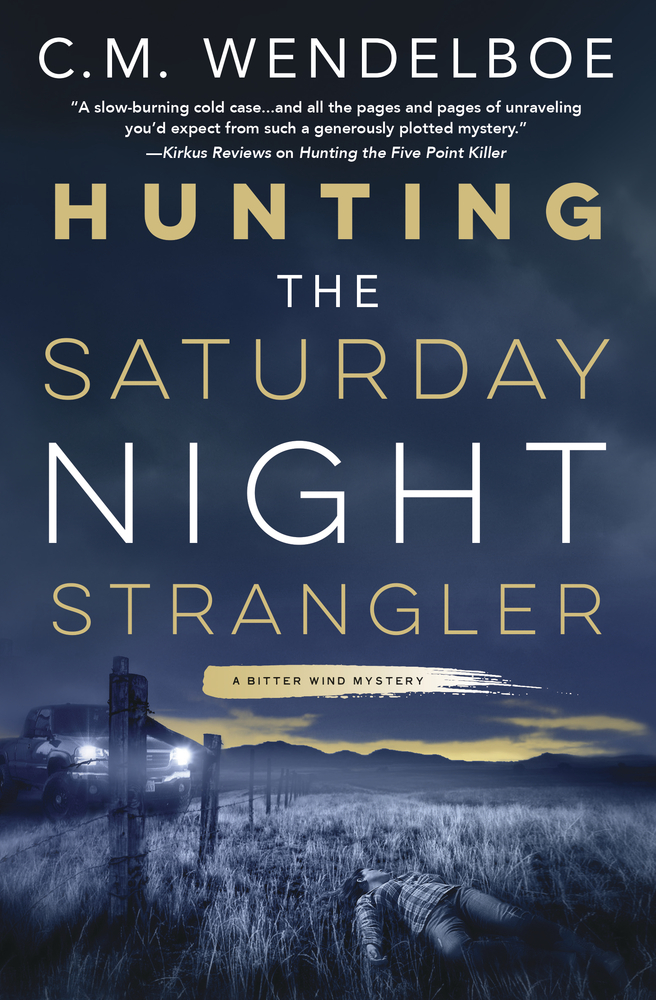 Retired homicide detective Arn Anderson tracks a coldblooded killer in this riveting novel of suspense by the author of Hunting the Five Point Killer.
Two innocent victims, strangled to death on consecutive Saturday nights. Even as they see the pattern emerging, retired detective Arn Anderson and TV reporter Ana Maria Villarreal can't seem to convince the Cheyenne police that the killer may strike again.
Hunting a remorseless murderer leads Arn and Ana Maria down a rabbit hole of ranchers and rustlers. But the closer they come to catching the killer, the more they're met with suspicion. And when their investigation collides with a desperate act of violence, they wonder whether they're unwinding the killer's twisted thread of clues or tightening their own noose.
Praise for the Bitter Wind Mysteries:
"A slow-burning cold case with copious clues, conscientious detection, a high body count, periodic interruptions from the killer's viewpoint, and all the pages and pages of unraveling you'd expect from such a generously plotted mystery."
—Kirkus Reviews
"Wendelboe is a skilled writer who ratchets up the suspense."
—Margaret Coel, New York Times bestselling author of Winter's Child
C. M. Wendelboe (Cheyenne, WY) is the author of the Spirit Road Mysteries (Penguin). During his thirty-eight-year career in law enforcement, he served successful stints as a sheriff’s deputy, police chief, policy adviser, and supervisor for several agencies. He was a patrol supervisor when he retired to pursue his true vocation as a fiction writer. Visit him online at www.SpiritRoadMysteries.com.
Friday, September 21, 2018
Finding the Story for BELOW THE TREE LINE: A Guest Post from Author Susan Oleksiw

A few years ago I was facing the end of one mystery series and trying to think up an interesting setting and protagonist for something new. An idea might come to me, but I'd put it aside because it wasn't compelling, and besides, I had other things to think about. In their retirement years my parents did the unexpected: they sold their home in a lovely town on the ocean and, in their seventies, bought a farm and went back to the land.
I watched this with some amusement, following my father along the trails he cut in the woods, waving to the farmer on his tractor, getting to know the neighbors at church suppers. My mother went back to canning vegetables from her small garden, something she hadn't done since the 1950s. They ate a lot of zucchini.
When my parents died I found myself the owner of a farm that consisted of large tracts of woods and a field rented to another farmer. I also found myself responsible for the periodic forestry management plans required by the state.
I'd helped with some of this legal work while my mother was still alive, but the full extent wasn't clear until I was solely responsible for all of it. I learned a lot about trees, ecology, forestry, and more. The work was interesting, the foresters helpful and informative, and a walk in the woods always a pleasure. I learned about this part of New England and read farm journals. And then it dawned on me. Why not use what I knew for a new series featuring a farmer whose farm is mostly wood products?
I invented a fictional farming community in the Pioneer Valley, to distinguish the area from the Berkshires, populated the town with a variety of friends and small-business owners based on long-gone relatives, and gave my protagonist a barn cat (everyone needs a cat to control the mice population) and a rescue dog (what's a walk in the woods without a dog?).
As I sketched out the first story, for Below the Tree Line, I was flooded with memories of all the evenings my brothers and parents sat around telling stories about the dairy farm where we'd been born, in Connecticut, my great-grandfather's farm (a man I knew), the farming community where my mother spent every summer of her childhood, and the occasional swamp Yankee we encountered. It turned out I knew more about this life than I realized.
My protagonist, Felicity O'Brien, took shape as the daughter and granddaughter of farmers, but also as the daughter of a line of women with a special gift for healing. This nugget of character came from an encounter with a small church whose members participated in healing services. Despite their apparent special gifts, they were ordinary folk anyone might encounter in the community--teachers, accountants, health care workers, loggers, shop owners. It was their matter-of-factness about their healing practices that caught my imagination.
The more I explored my fictional world in this part of New England, the more interesting it became. Instead of finding myself in an isolated community, I discovered the way these rural areas link to the larger world and feel every wave or wind brushing over the entire country. And all the while they are striving to maintain a way of life few even know about anymore.
***
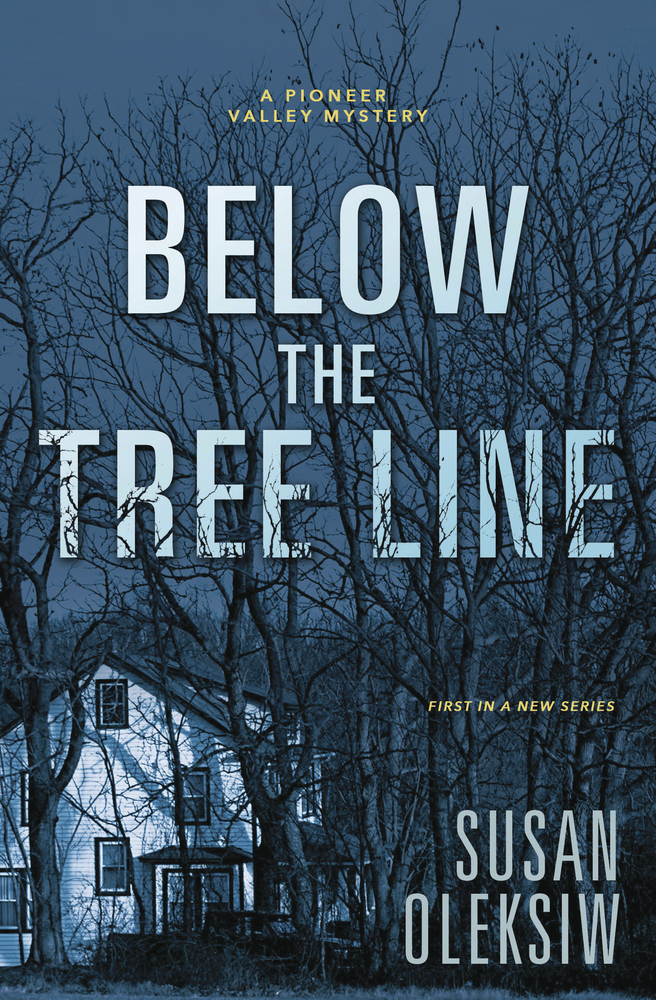 In the Massachusetts countryside, family secrets run deep...but an outside threat could uproot them all
Felicity O'Brien hopes the warning shot fired from her porch is enough to scare off the intruder who's been snooping around her family's Massachusetts farm. Days later, when two young women are found dead nearby, Felicity can't figure out how the deaths are related, and even her inherited healing touch isn't enough to ease the community's pain over the tragic loss.
Felicity does know that somebody wants something bad enough to kill for it, but all she has is the neglected property her parents passed down to her. Joining forces with her friend Jeremy Colson, Felicity tries to uncover the truth and save herself and her land from those who are capable of unthinkable harm.
Praise for Below the Tree Line:
"Oleksiw crafts a classic small-town mystery...where a closely knit cast of characters are forced to wrestle with the unwanted intrusion of the modern world that threatens long-standing traditions."
—Sheila Connolly, New York Times bestselling author of the County Cork Mystery series
"A woman with healing hands and a rescued dog trap a killer in Susan Oleksiw's engaging Below the Tree Line."
—Hallie Ephron, New York Times bestselling author of You'll Never Know, Dear
Susan Oleksiw (Massachusetts) is the author of the Mellingham mystery series and the Anita Ray mystery series. She is the co-founder of Level Best Books, which publishes an annual anthology of the best New England crime fiction. Her writing has appeared in Alfred Hitchcock Mystery Magazine and she served as co-editor for The Oxford Companion to Crime and Mystery Writing. Visit Susan online at www.SusanOleksiw.com.
Monday, September 10, 2018
eBook Deal: HUNTING THE FIVE POINT KILLER by C.M. Wendelboe is Just $0.99!
Everyone loves a deal! for a limited time, grab the HUNTING THE FIVE POINT KILLER ebook by C.M. Wendelboe for just $0.99!

eBook Deals: Grab the First Three Books in the Asperger's Mystery Series by E.J. Copperman Starting at Just $0.99!
Everyone loves a deal! for a limited time, grab the first three ebooks of the Asperger's Mystery Series by EJ Copperman/Jeff Cohen while they're on sale!


eBook Deals: Grab the First Three Books in the Chloe Ellefson Mystery Series Starting at Just $0.99!
Everyone loves a deal! for a limited time, grab the first three ebooks of the Chloe Ellefson Mystery Series by Kathleen Ernst while they're on sale!


Sunday, September 9, 2018
#MeToo, Gun Violence, and Black Swan Rising: A Guest Post from Lisa Brackmann

In late fall 2013, I moved back to my hometown of San Diego after two and a half decades away. It's not like I'd been a stranger all that time—I'd been living up the freeway in Venice Beach, and I visited San Diego frequently. But visiting a place and living in it are two different things. The city of my birth had changed–a lot.
I spent a lot of time taking very long walks around different parts of San Diego, particularly around Clairemont, where I’d gone to high school. I’d always thought of Clairemont as the absolute burbiest of the burbs—a middle-to-working class community of tract houses that sprawls over a large area north of the 8 freeway and east of the 5 and the bay. My high school, Clairemont High, was the real life inspiration for Fast Times at Ridgemont High. That should give you some idea.

On foot, I was finding Clairemont to be a lot more interesting than I’d remembered–I encountered a Buddhist temple in a tract house, a trailer park, Middle Eastern and Brazilian markets, Taiwanese bakeries, pho restaurants, breweries, and a whole lot of taco shops and Tiki decorations. Still middle-to-working class for the most part, but with a growing number of faux Tuscan McMansions.
Clairemont, like the city of San Diego itself, had become bigger, busier, more diverse. (You can see some of the Clairemont sights in my Instagram account, @otherlisa, using the hashtag #WildsofClairemont.)
Oh, and the beer! There are six breweries within walking distance of my house (CAVEAT: I take long walks). San Diego can credibly claim to be the craft beer capital of the world, with 152 operational brewhouses as of 1/30/18.

That’s...a lot of beer.

Politically, San Diego was no longer the conservative military town of my childhood. In fact, Clairemont had become a swing district, electing a Democrat to the House of Representatives for the first time in 2012. But in 2014 this was still most definitely a swing district–and the Congressional race that year was heavily contested. At the time more money was spent on this race than any other congressional race in history. The advertisements were constant and the attack ads, ubiquitous and incredibly nasty. I've always been a political junkie, and I watched it all, fascinated and repelled.
Another thing going on at that time that I found fascinating and repelling: GamerGate.
In case you missed it, "GamerGate" was ostensibly about ethics in journalism covering the online gaming industry. What it really was about was attacking and shaming women involved in that industry who dared to advocate for more inclusive and more women-friendly games or even examine the kinds of sexist and racist tropes common in gaming. These attacks ranged from constant online harassment of women, people of color, and at times, their male allies to doxing, "swatting" (calling in a fake police report to provoke a SWAT team response on a target) and real-life death threats.
The attackers? Mostly young, angry white men.
The internet has long been hostile territory for women and people of color, but this was several steps beyond anything that had gone on before, with subReddits and other chat boards used to organize and coordinate attacks.
GamerGate was not taken terribly seriously by many. After all, it was just the internet, right? If you can't take the heat, get out of the kitchen. Or more accurately, get back into the kitchen where you belong. The virulent misogyny behind this "movement" was undeniable, but for whatever reason, online platforms and commentators were slow to respond in any positive way.
Here's the thing, though. Misogyny is frequently the canary in the coal mine.
It is not a stretch to say that the current "Alt-Right" movement, up to and including Neo Nazis, grew out of GamerGate, sharing ideologies and adopting their methods of online organization and harassment.
"Before white supremacists, neo-Nazis and white nationalists marched in Charlottesville, Virginia in August they were organizing behind a computer screen," according to a video piece by NBC News. "And a lot of that organizing happened through a messaging service called Discord which was original created to connect video game players to one another. "This is just the latest in the long-running, shared history between the gaming community and the alt-right."
Something else I found fascinating and appalling became another key element of BLACK SWAN RISING: Mass shootings, in particular the constant drumbeat of these stories, of deaths, of a media storm over a particularly violent incident that quickly subsides and is replaced by the next mass slaughter, to the accompaniment of meaningless "thoughts and prayers."
I started researching mass shootings as a phenomena. I found that the great majority of mass shooters have domestic violence in their backgrounds (in fact, most mass shootings are "domestics," with the victims primarily being the male shooter's family). At the very least, these shooters have documented sentiments of hatred of women.
Elliot Rodger, the Isla Vista shooter, is just one example. "I will punish all females for the crime of depriving me of sex," he wrote in a document outlining his massacre plans. "They have starved me of sex for my entire youth, and gave that pleasure to other men. In doing so, they took many years of my life away."
"I will arm myself with deadly weapons and wage a war against all women and the men they are attracted to. And I will slaughter them like the animals they are."
Another common thread? Racism and other "Alt-Right" beliefs.
Elliott Rodger, Dylann Roof, Christopher Harper Mercer, Alexandre Bissonette, Nikolas Cruz (the Parkland shooter)—the list goes on and on.
From Rodger, again: "How could an inferior, ugly black boy be able to get a white girl and not me? I am beautiful, and I am half white myself. I am descended from British aristocracy. He is descended from slaves. I deserve it more."
"How could an ugly Asian attract the attention of a white girl, while a beautiful Eurasian like myself never had any attention from them?"
And thus the horrible circle—online harassment, misogyny, racism, right-wing extremism, and mass slaughter—is closed.
I wrote the first chapter and a pitch for BLACK SWAN RISING in mid-2014, and then put it aside to write GO-BETWEEN. I ended up writing most of BLACK SWAN RISING in 2016. All I can say is that watching the political events unfold as I was writing was another peculiar mix of fascinating and appalling. There were times that I was afraid to write down what was in my head because I was scared that it might actually happen in front of me. I know, rationally, that this is ridiculous. But I felt a bit like Casey Cheng, one of the heroines of the novel, a reporter who by giving something a name fears that she's helped bring it to life.
This was not an easy book to write. Generally my books have a lot more humor to them than this one does. But I felt that it was an important book to write, and a necessary one. Maybe one thing that the #MeToo era has shown is that we need to call these things out, to give them names, to bring them into the light, if we truly want to defeat them.
***
 Sarah Price wants a career in politics. But she has a secret past that won't stay past, threatening her job on a San Diego congressman's reelection campaign.
Casey Cheng wants a story. An ambitious local television reporter, Casey needs to get her career back on track after being seriously injured in a mass shooting. When she investigates the man who nearly killed her, she finds a connection to a group of online harassers called #TrueMen—and realizes her shooter may not be the only killer they have inspired.
Casey's investigation and Sarah's secret put them both in the crosshairs of a hate group that targets anyone they've deemed to be against their cause, including Sarah's boss, the congressman. Now Sarah and Casey have a choice to make—do they hide? Or do they fight back?
Praise for Black Swan Rising:
"Black Swan Rising is more than the sum of its parts...In this gripping novel, Lisa Brackmann tells not just the harrowing story of two women impacted by a mass shooting but the story of America's deadly love affair with guns."
—Bryn Greenwood, New York Times bestselling author of All the Ugly and Wonderful Things
"Lisa Brackmann's Black Swan Rising is a savvy, riveting thriller that's also deeply human, with characters who are as authentic as they are compelling."
—Lou Berney, Edgar Award–winning author of The Long and Faraway Gone
"Lisa Brackmann writes with passion, guts, and heart. Black Swan Rising is more than just a thrilling read—it's also an unflinching examination of the corrosive effects of racism and misogyny on American culture."
—Chris Holm, Anthony Award–winning author of The Killing Kind
"A raw and masterful mystery thriller that explores the real darkness of the human soul."
—Jonathan Maberry, New York Times bestselling author of Glimpse
Lisa Brackmann has worked as an executive at a major motion picture studio, an issues researcher in a presidential campaign, and was the singer/songwriter/bassist in an LA rock band. Her debut novel, Rock Paper Tiger, set on the fringes of the Chinese art world, made several "Best of 2010" lists, including Amazon's Top 100 Novels and Top 10 Mystery/Thrillers, and was nominated for the Strand Magazine Critics Award for Best First Novel. Her second novel, Getaway, won the Los Angeles Book Festival Grand Prize and was nominated for the T. Jefferson Parker SCIBA award. Hour of the Rat, #2 in the Ellie McEnroe series, was short-listed for Left Coast's World Mystery award, as was Ellie #3, Dragon Day (and was a Seattle Times Top 10 Mystery Pick). Lisa lives in San Diego with a couple of cats, far too many books, and a bass ukulele. Visit Lisa online at www.LisaBrackmann.com.
Friday, September 7, 2018
Five Fun Facts About Jess Lourey: A Guest Blog Post from MERCY'S CHASE Author Jess Lourey

1. I write with a box of See’s Chocolate Lollipops close by. If I can’t find a way out of a scene or get stuck on a big, white page, I suck on one of those, and it pulls the words loose.

2. The idea for the Salem's Cipher thriller series came from an offhand comment Chelsea Cain made while she and I were on a panel together. "I wish there were more kick-ass thrillers written by women and about women." Yeah, sister!
3. While Salem Wiley, the protagonist in Mercy's Chase, is a genius cryptanalyst, I am not. Doing crossword puzzles, reading mystery novels, and playing hide-and-go-seek are me at the top of my code-cracking game. I am, however, an excellent research and was delighted to discover all sorts of great cryptanalytical books and articles out there, including Helen F. Gaines's Cryptanalysis: A Study of Ciphers and Their Solution and Simon Singh's The Code Book: The Science of Secrecy from Ancient Egypt to Quantum Cryptography.
4. In my head, Salem Wiley looks like a cross between my niece, Esmae, and my friend, Angie. I think of the two of them whenever I write her.
5. For research, I visited most of the locations included in Mercy's Chase, including a tour that brought me inside of Stonehenge. Tough job!

***
 "An immersive voice, an intriguing story, a wonderful character—highly recommended!"
—Lee Child, #1 New York Times bestselling author of the Jack Reacher novels
What if everything you thought you knew about Stonehenge was wrong?
When agoraphobic genius Salem Wiley lands her dream job as an FBI cryptanalyst, she vows never to return to the witch hunt underworld, where ancient secrets encrypted by hunted women have the power to rewrite history. Her resolve disappears when sweet Mercy Mayfair, the child she is pledged to protect, is kidnapped. With the help of the enigmatic Agent Lucan Stone, Salem is forced to code hunt in Ireland, England, and Scotland to keep the girl alive. As the clock ticks, she must face the terrible truth that there is only one way to free Mercy: crack the unbreakable code of Stonehenge.
Praise for Mercy's Chase:
"Both a sweeping adventure and race-against-time thriller, Mercy's Chase is fascinating, fierce, and brimming with heart—just like its heroine, Salem Wiley."
—Meg Gardiner, author of Into the Black Nowhere
Jess Lourey (rhymes with “dowry”) is an Anthony, Lefty, and Agatha-nominated author best known for her critically-acclaimed Mira James Mysteries, which have earned multiple starred reviews from Library Journal and Booklist, the latter calling her writing “a splendid mix of humor and suspense.” She is a tenured professor of creative writing and sociology, a recipient of The Loft's Excellence in Teaching fellowship, a regular Psychology Today blogger, and a sought-after workshop leader and keynote speaker who delivered the 2016 "Rewrite Your Life" TEDx Talk. Mercy's Chase, the second in the feminist thriller series Lee Child calls "highly recommended," releases September 8. You can find out more at www.jessicalourey.com.
Saturday, August 25, 2018
Happy #NationalDogDay!

For so many of us, our pets go beyond an animal presence in our lives; they are our children, extended members of our family who bring our soul love and nourishment.
To celebrate our dogs this National Dog Day, I wanted to take a look at some of our fabulous books that celebrate the bonds we have with our dogs - even as they help us solve crimes!

Join veterinary technician Carrie Kennersly, owner of the new Barkery & Biscuits Dog Bakery, as she and her canine companions navigate the mysteries of murder.
Grab the latest release in the series, Pick and Chews!
Looking for more Linda O. Johnston mysteries that feature dogs? Check out the Superstition Mystery series!

Join Cameron Cripps-Hayman and the rest of the Metamora Action Agency as they solve crimes, aided by their canine companions.
The latest release in the series, Fatal Festival Days, is now available for pre-order!
 Read if you like: Yoga, German Shepherds, and cozy mysteries
Join yoga instructor Kate Davidson, her German Shepherd Bella, and boyfriend Michael as they solve murder after murder.
Grab the latest release in the series, Pre-Meditated Murder.
 Read if you like: Photography, animals of shapes and sizes, and cozy mysteries
Join animal photographer Janet McPhail and her cadre of animal companions as they solve murders.
Grab the latest release in the series, Shepherd's Crook.
The latest release in the series, Fatal Festival Days, is now available for pre-order!
Join yoga instructor Kate Davidson, her German Shepherd Bella, and boyfriend Michael as they solve murder after murder.
Grab the latest release in the series, Pre-Meditated Murder.
Join animal photographer Janet McPhail and her cadre of animal companions as they solve murders.
Grab the latest release in the series, Shepherd's Crook.
Subscribe to:
Posts (Atom)